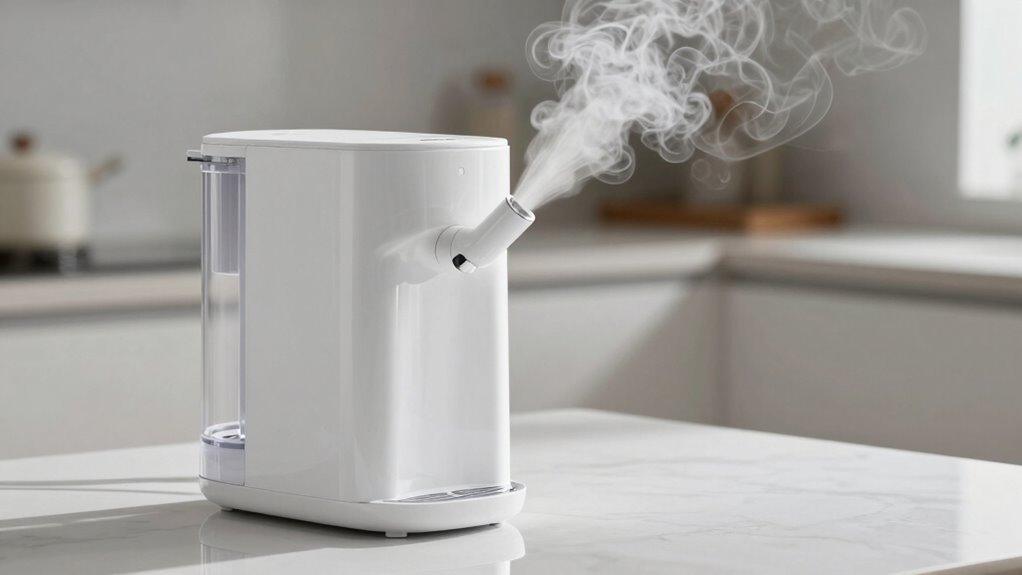

If your hot water dispenser is spitting steam, it’s often caused by excess pressure or mineral buildup inside the unit. To fix this safely, turn off and unplug the dispenser, then clean and descale it using vinegar and water to remove deposits and reduce pressure. Check the pressure relief valve for blockages or damage, and replace if needed. Continuing with this guide will help you understand how to prevent future issues and keep your dispenser safe and efficient.
Key Takeaways
- Turn off and unplug the dispenser to safely inspect for mineral buildup or pressure issues.
- Check and clean or replace the pressure relief valve to prevent excess pressure buildup.
- Descale the unit regularly using vinegar and water to remove mineral deposits causing steam spitting.
- Ensure proper maintenance by following the manufacturer’s cleaning schedule and guidelines.
- If steam persists after cleaning, seek professional help to inspect and repair internal pressure components.
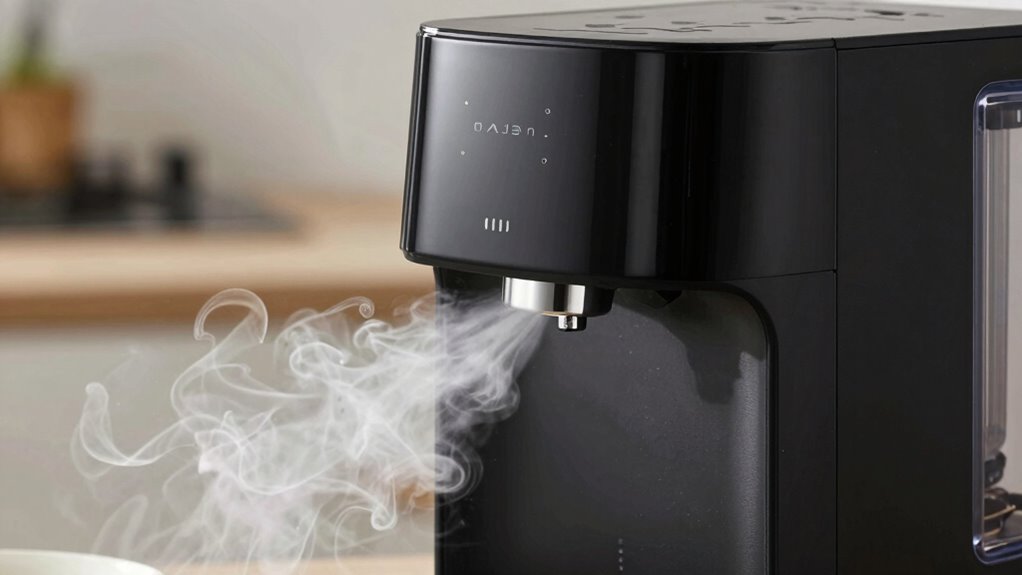
If your hot water dispenser is spitting steam, it’s a sign that something isn’t working quite right. This issue can be unsettling, but it’s often fixable with some straightforward steps. First, it’s essential to understand that steam is usually caused by excess pressure or mineral buildup inside the unit. To address this, you need to start with proper cleaning tips. Regularly cleaning your dispenser helps prevent mineral deposits from accumulating, especially if you have hard water. Use a mixture of vinegar and water to descale the system—run this solution through the dispenser, let it sit for 20-30 minutes, then flush with clean water. This simple maintenance step can considerably reduce the chances of steam issues caused by mineral buildup.
Alongside cleaning, sticking to a maintenance schedule is indispensable for keeping your hot water dispenser functioning safely and efficiently. You should perform a thorough descaling process every three to six months, depending on your water hardness. Consistent maintenance not only helps prevent steam spitting but also prolongs the lifespan of your appliance. Check the manufacturer’s guidelines for specific recommendations, but in general, regular cleaning of the heating element and internal components is essential. When you undertake these maintenance tasks, always unplug the dispenser first to avoid electrical hazards. Use soft brushes or cloths to wipe down accessible parts, avoiding harsh abrasives that could damage the unit. Additionally, understanding the importance of contrast ratio in related appliances can help you appreciate the significance of proper functioning and maintenance for safety and performance.
If you notice steam still escapes after cleaning and maintenance, it could be a sign of a faulty pressure relief valve or a buildup of pressure inside the tank. In this case, turn off and unplug the dispenser, then carefully inspect the valve and other accessible parts for signs of damage or blockage. Sometimes, mineral deposits can cause the valve to malfunction, trapping excess pressure. Replacing a faulty valve may require professional assistance, so don’t hesitate to contact a technician if needed.
Frequently Asked Questions
Can Steam Spitting Damage My Water Dispenser?
Steam spitting can potentially damage your water dispenser if it indicates internal buildup or mineral deposits. Poor water quality can worsen this issue, leading to leaks or malfunctions. To guarantee appliance safety, regularly descale your dispenser and use filtered water. Addressing steam spitting promptly helps prevent long-term damage, keeps your water hot and safe, and maintains the device’s efficiency. Proper maintenance ultimately safeguards your appliance and ensures clean, safe water.
Is It Safe to Open the Dispenser During Steam Spitting?
Opening your dispenser during steam spitting is like playing with fire—dangerous and risky. For safety, you should never open it during this process. Instead, follow troubleshooting steps and safety precautions to prevent accidents. Allow the steam to vent naturally, and wait until it stops before opening. This keeps you safe and protects your appliance, ensuring you address the issue without risking burns or damage.
How Often Should I Descale My Hot Water Dispenser?
You should descale your hot water dispenser every 1 to 3 months, depending on your water’s mineral content. Regular descaling helps prevent mineral buildup, which can cause steaming issues and reduce efficiency. If you notice slower heating or unusual noises, it’s time to descale sooner. Using a descaling solution or vinegar, follow your manufacturer’s instructions to keep your dispenser running smoothly and safely.
Does Spitting Steam Mean My Dispenser Is Broken?
Don’t worry, spitting steam doesn’t mean your dispenser’s broken. It’s often a sign of mineral buildup or condensation, which is normal and manageable. Regular maintenance tips, like descaling and cleaning, can prevent this. If you’re comfortable with DIY repairs, you can carefully check for blockages or deposits. Remember, a little upkeep keeps your dispenser functioning smoothly, avoiding costly repairs and ensuring hot water stays safe and reliable.
Are There Specific Models More Prone to Spitting Steam?
Some models are more prone to spitting steam, especially those with outdated safety features or design flaws. Always check for product recalls and follow manufacturer warnings to guarantee safe operation. If your dispenser is older or has a history of issues, you might experience more steam spitting. Regular maintenance and adhering to manufacturer guidelines can reduce this problem, but if concerns persist, consider replacing the unit with a newer, safer model.
Conclusion
Knowing how to safely fix your hot water dispenser can save you time and prevent potential hazards. Did you know that appliances like water dispensers can develop mineral buildup in as little as three months, leading to steam spitting? Regular cleaning and maintenance are essential. By following these simple tips, you’ll ensure your dispenser operates smoothly and safely, keeping your hot water ready whenever you need it. Stay vigilant, and enjoy worry-free hot water on demand.