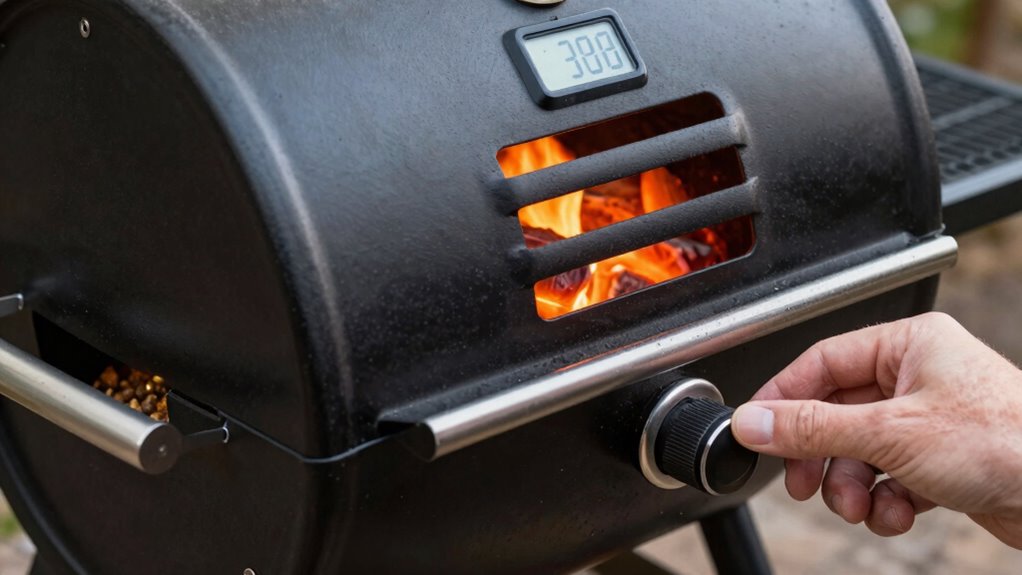
If your pellet grill’s temperature swings, the main culprit is often an inconsistent pellet feed rate. To stabilize heat, you should adjust the feed settings by either lowering it if the temperature overshoots or increasing it if the heat drops. Keeping your pellets dry and clean, plus maintaining good airflow, also helps. Fine-tuning your feed rate is a simple fix, and learning more about controlling your grill’s heat will lead to better cooking results.

Get home appliances delivered free with Prime
- Fast, free delivery on millions of items
- Prime Video, Amazon Music and more included
- Member-only deals all year
Key Takeaways
- Ensure the pellet feed rate is set correctly to maintain a steady temperature.
- Use high-quality, dry pellets to promote consistent combustion and heat stability.
- Regularly clean the firepot and grill components for optimal airflow and pellet feeding.
- Utilize a digital controller with automatic pellet feed adjustment for precise temperature control.
- Monitor and adjust the pellet feed rate as needed to prevent temperature overshoot or drops.
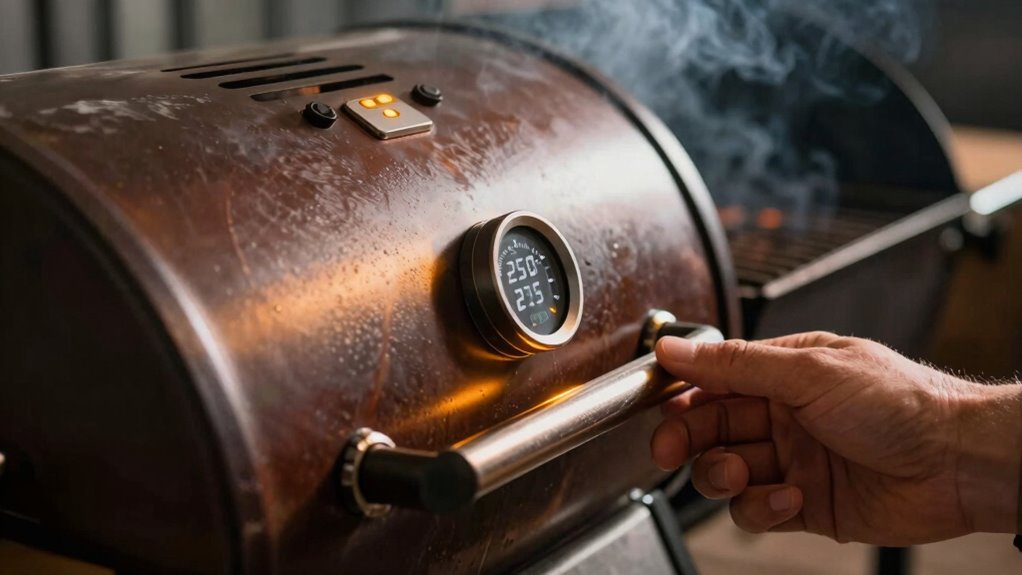
Have you ever wondered how to set the perfect temperature on your pellet grill? If so, you’re not alone. Many grill owners experience temperature fluctuations that can throw off your cooking, especially when you’re aiming for precise results. One common culprit behind inconsistent heat is the pellet feed rate. When the pellet feed rate isn’t properly managed, your grill can swing between high and low temperatures, making it tricky to maintain steady heat. Luckily, understanding how to control this aspect can help you stabilize your grill’s temperature and achieve consistent, delicious results every time.
Temperature fluctuations often stem from the way your pellet grill regulates heat. The pellet feed rate is a key factor here. If your grill is feeding pellets too aggressively, it might overshoot your target temperature, causing it to spike. Conversely, if the feed rate is too slow or inconsistent, the temperature can drop unexpectedly. The goal is to find a balance where the pellet feed rate is steady enough to keep your grill at a consistent temperature. Most modern pellet grills have digital controllers that automatically adjust the pellet feed rate based on your desired temperature. However, if your grill isn’t maintaining that steady heat, it’s worth checking how your feed rate is set.
Pellet feed rate balance is key to maintaining consistent grill temperature.
Adjusting the pellet feed rate can be simple. Start by setting your target temperature and then observe how your grill responds. If it tends to climb too high or fluctuate wildly, try lowering the pellet feed rate slightly. If it struggles to reach your desired temperature or drops below it, increasing the feed rate might do the trick. Many grills also allow you to set a specific feed rate percentage, giving you more control. Keeping a close eye on this setting during different cooking sessions can help you identify the most suitable pellet feed rate for your particular grill and cooking style. Additionally, monitoring pellet consumption can help ensure your pellets are feeding properly and maintaining consistent heat levels.
In addition to adjusting the feed rate, ensuring your pellet supply is consistent and of good quality is vital. Fluctuations in pellet quality or moisture content can also impact how smoothly your grill maintains temperature. Regularly cleaning your grill’s firepot and ensuring proper airflow can further stabilize heat. Remember, a well-maintained pellet grill with an appropriate feed rate and good-quality pellets will respond more predictably, minimizing temperature swings. With these adjustments, you’ll find your grill more responsive, making it easier to cook everything from briskets to burgers with perfect, consistent heat.
Products Worth Considering

Ring Alarm 14-Piece Wireless Security System Kit

LEVOIT Vital 200S-P Smart Air Purifier for Large Rooms

Hisense 85 U6 Pro Series Mini-LED ULED 4K UHD HDR Gaming AI Smart Fire TV (85U6SF Pro)
As an affiliate, we earn on qualifying purchases.
Frequently Asked Questions
How Often Should I Calibrate My Pellet Grill Temperature?
You should calibrate your pellet grill temperature at least once a season or after a significant change in ambient temperature. Use a reliable digital thermometer to check the accuracy of your grill’s built-in thermometer. If you notice consistent discrepancies, it’s time for calibration. Regular calibration ensures precise cooking, prevents temperature swings, and keeps your grill performing at its best. Don’t wait too long—periodic calibration is key to ideal results.
Can Ambient Weather Conditions Affect Pellet Grill Temperature Stability?
Did you know outdoor weather can cause temperature swings in your pellet grill? Yes, ambient conditions like outdoor humidity and wind influence heat stability. High humidity can make it harder for your grill to maintain consistent temps, while wind can cause rapid temperature drops. To stabilize heat, shield your grill from wind and avoid grilling during extreme humidity. These simple steps help keep your temps steady, ensuring perfect results every time.
What Types of Pellets Help Maintain Consistent Heat?
You should choose high-quality pellets, as they burn more consistently and produce stable heat. Look for pellets with low moisture content and uniform size, which help maintain steady temperatures. Additionally, adjusting your grill’s ventilation properly guarantees better airflow, preventing temperature swings. Combining good pellet quality with proper ventilation adjustment keeps your pellet grill running at a consistent heat, making your cooking more predictable and delicious every time.
Are There Specific Maintenance Routines to Prevent Temperature Swings?
Did you know that regular maintenance can reduce temperature swings by up to 30%? You should routinely clean sensors to guarantee accurate readings and check seals for gaps that cause heat loss. This simple routine keeps your pellet grill stable, preventing uneven cooking. By staying proactive with cleaning sensors and inspecting seals, you’ll enjoy consistent heat and delicious results every time, making your grilling experience smoother and more enjoyable.
How Does the Age of the Grill Impact Temperature Consistency?
As your pellet grill ages, you might notice increased temperature fluctuations. Over time, components like the auger, fan, and sensors can wear out, causing inconsistent heat. Regular maintenance helps, but aging parts may need replacing to restore stability. Keep an eye on your grill’s performance, and consider upgrading worn components to minimize temperature fluctuations and maintain steady heat during your cooks.
Conclusion
Now that you’ve stabilized your pellet grill temps, you’ll feel like a barbecue wizard commanding a fiery dragon! No more wild swings turning your perfect brisket into a smoky rollercoaster ride. With this simple fix, you’ll keep your heat steady as a mountain stream, making every cook an epic masterpiece. Say goodbye to chaos and hello to grilling greatness—your backyard will become the envy of all, and you’ll wonder how you ever cooked without this magic trick!