You should never use a steam cleaner on hardwood, unsealed stone, or laminate floors because the high heat and moisture can cause irreversible damage. Steam can lead to warping, swelling, or cracking, and leave residues that attract dirt. These surfaces are sensitive and may lose their finish or become stained over time. Continuing with improper techniques can shorten your floor’s lifespan—so keep exploring to find safer, more effective cleaning methods.
Key Takeaways
- Never steam clean hardwood floors, as excess moisture can cause warping, swelling, and damage the finish.
- Avoid using steam on unsealed or porous surfaces like natural stone, marble, or laminate to prevent staining and deterioration.
- Do not rely on steam cleaning for deeply embedded dirt; it may be ineffective and leave residues attracting more grime.
- Steer clear of steam on vinyl or tile floors with cracks or loose tiles, as moisture can seep in and loosen adhesives.
- Always follow manufacturer guidelines; many surfaces explicitly warn against steam cleaning to avoid costly damage.
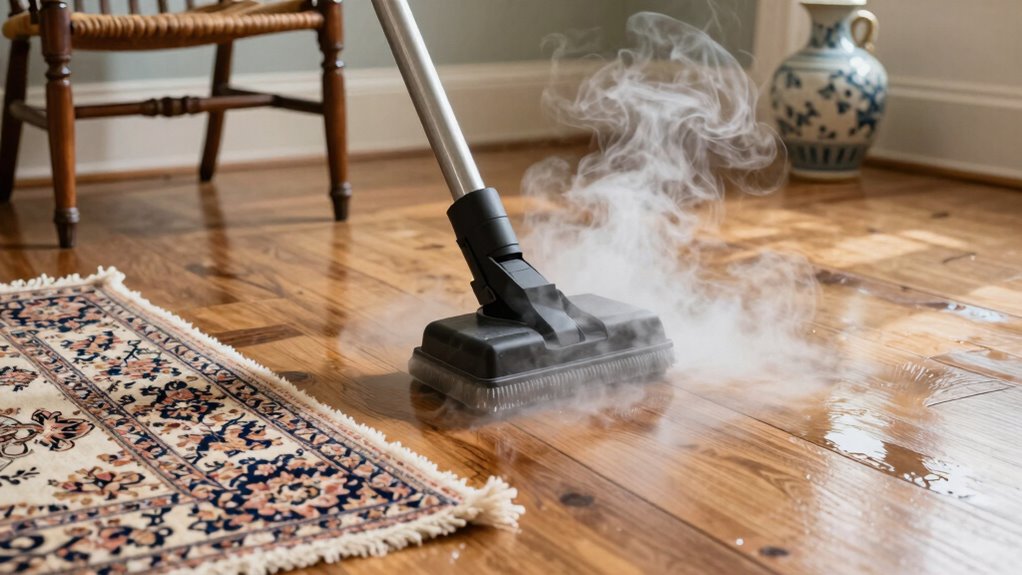
Have you ever wondered if steam cleaning floors is the most effective way to keep them spotless? While it’s tempting to rely on steam to sanitize and refresh your surfaces, there are certain materials and situations where this method can do more harm than good. One major concern is the buildup of chemical residues. Even if you’re using a steam cleaner with pure water, some models and products on the market can leave behind traces of cleaning solutions or release mineral deposits from hard water. These residues can attract dirt over time, making your floors look dull and grimy instead of sparkling clean. Plus, if you’re not careful, these residues can cause skin irritation or other health issues, especially in homes with children or pets who crawl and play on the floor.
Another critical factor to contemplate is the potential damage to hardwood floors. Hardwood is sensitive to moisture, and steam cleaning introduces high levels of humidity that can penetrate the wood’s surface. This excess moisture can cause the wood to warp, swell, or crack over time. It may also lead to the loosening of the finish, making your flooring more vulnerable to scratches and stains. Many hardwood manufacturers explicitly advise against using steam cleaners because of these risks, and ignoring these warnings can considerably reduce the lifespan of your floors. Even if your hardwood seems sturdy, continuous exposure to steam can compromise its integrity, leading to costly repairs or refinishing.
Furthermore, steam cleaning may not be effective enough to eliminate deep-seated dirt and grime in certain materials. For instance, sealed tile or vinyl floors typically fare well with steam, but porous surfaces like unsealed stone or laminate can absorb water and become damaged. The intense heat and moisture from steam can cause discoloration, swelling, or peeling in these materials, so it’s best to avoid steaming them altogether. On delicate surfaces like natural stone, the risk of etching or staining from residual minerals or improper cleaning methods outweighs any potential benefits. Additionally, proper cleaning techniques are often more effective and safer for maintaining your floors’ longevity.
Frequently Asked Questions
Can Steam Cleaning Damage Hardwood Floors?
Yes, steam cleaning can damage hardwood floors if you’re not careful. The high heat and moisture can cause the wood to warp or swell, especially if you use harsh chemicals or wet mopping excessively. Instead, it’s better to avoid steam cleaning altogether on hardwoods. Use a damp cloth or a gentle cleaner to maintain your floors, and steer clear of prolonged exposure to moisture that can lead to lasting damage.
Is Steam Cleaning Safe on Laminate Flooring?
Think of your laminate floor as a delicate canvas. Steam cleaning can be a risky brushstroke, as moisture seeps into seams, causing laminate damage and surface warping. While it may seem harmless, the high heat and moisture can weaken the core layers, leading to costly repairs. If you want to preserve its beauty, avoid steam cleaners and opt for gentler cleaning methods that protect your floor’s integrity.
How Often Should I Steam Clean Tile Floors?
You should steam clean tile floors about once every 3 to 6 months, depending on foot traffic and dirt buildup. Avoid using harsh cleaning agents that could harm the environment or damage your tiles. Opt for eco-friendly solutions when possible, and verify your steam cleaner is set to the right temperature. Regular cleaning minimizes dirt and grime while reducing environmental impact, keeping your tiles looking fresh and your space healthier.
Can Steam Cleaning Remove Old Stains?
You can often see old stains lift away with steam cleaning, as the intense heat penetrates deep into the grout and tile, loosening stubborn grime. However, for safety and stain removal effectiveness, keep in mind that steam cleaning isn’t a miracle cure. It works best on recent stains; older, set-in marks may need special treatments. Always follow steam cleaning safety guidelines to avoid damaging delicate surfaces or spreading bacteria.
Does Steam Cleaning Kill Bacteria Effectively?
Yes, steam cleaning kills bacteria effectively when used properly. Many steam cleaning myths suggest it’s a miracle solution, but it’s crucial to follow instructions for maximum bacteria elimination. High-temperature steam penetrates deep into surfaces, destroying germs and allergens. However, you should be aware that not all bacteria are eliminated if the steam isn’t hot enough or applied correctly. Proper use ensures a cleaner, healthier environment by effectively reducing bacteria.
Conclusion
While steam cleaning floors might seem like a quick fix, it’s a double-edged sword you shouldn’t wield on every surface. Think of it as a powerful thunderstorm—use it wisely, or it could cause more harm than good. Certain floors and materials are like delicate flowers that can’t handle this storm’s force. Always know what’s safe to clean with steam, or you might end up doing more damage than dirt. Stay cautious and clean smart!