To prevent failure in your tankless water heater, you should flush it regularly to remove mineral buildup like calcium and lime. Turn off the power and water supply, connect a hose to service valves, and circulate a vinegar-water mix through the system for 45-60 minutes. Afterward, flush with clean water. Performing this routine annually helps maintain efficiency and prolongs the heater’s lifespan—continue with this essential maintenance to keep your heater running smoothly.
Key Takeaways
- Regularly flush the heater at least once a year to remove mineral buildup and maintain efficiency.
- Turn off power and water supply before connecting a vinegar solution via service valves.
- Circulate a 50/50 vinegar-water mixture through the heat exchanger for 45–60 minutes to dissolve deposits.
- Follow with a thorough rinse using clean water to remove residual mineral deposits.
- Proper installation and routine maintenance extend the lifespan and prevent costly failures of the unit.
Are you tired of running out of hot water during your morning shower? If so, a tankless water heater might be the perfect solution. These units provide on-demand hot water, offering endless comfort without the bulky tank. However, to keep your tankless system running smoothly and prevent costly failures, regular maintenance is essential. One of the most effective maintenance tips is performing routine flushing to remove mineral buildup, especially if you have hard water. Over time, minerals like calcium and lime can accumulate inside the unit, reducing efficiency and risking damage. Flushing clears out these deposits, ensuring maximum performance and extending your heater’s lifespan.
Before you start flushing, it’s important to contemplate installation considerations. Proper installation sets the foundation for easy maintenance and reliable operation. Ensure your unit is installed in a location with easy access, so you can perform routine maintenance without hassle. Check that your plumbing connections allow for straightforward flushing procedures, and confirm the unit’s flow rate and size match your household demands. If you’re unsure about these considerations, consulting a professional installer is a smart move. They can help you position the heater correctly and set up the necessary valves for maintenance tasks. Proper installation not only facilitates maintenance but also boosts efficiency and safety. Proper installation is key to ensuring your system operates at peak performance and lasts longer.
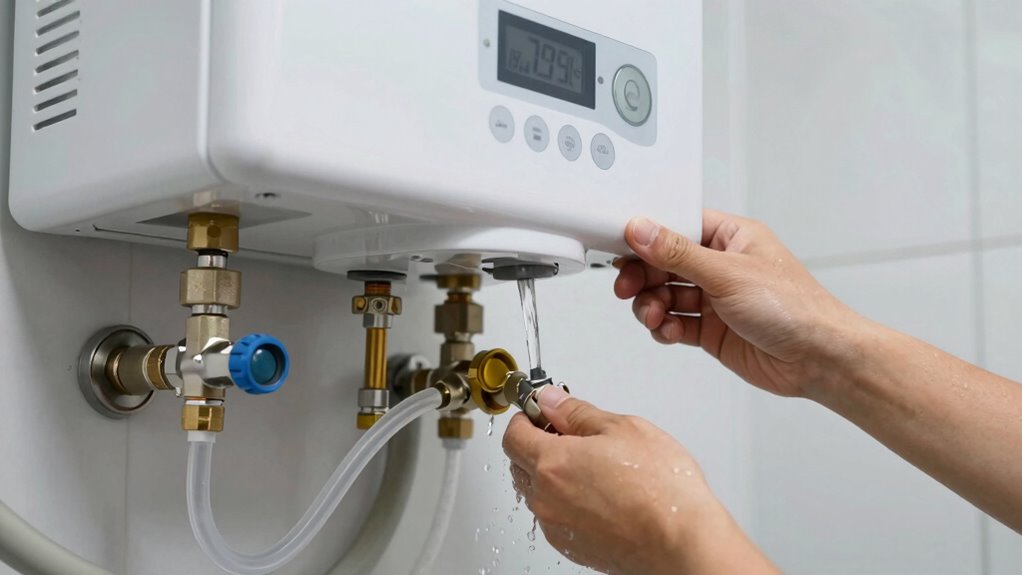
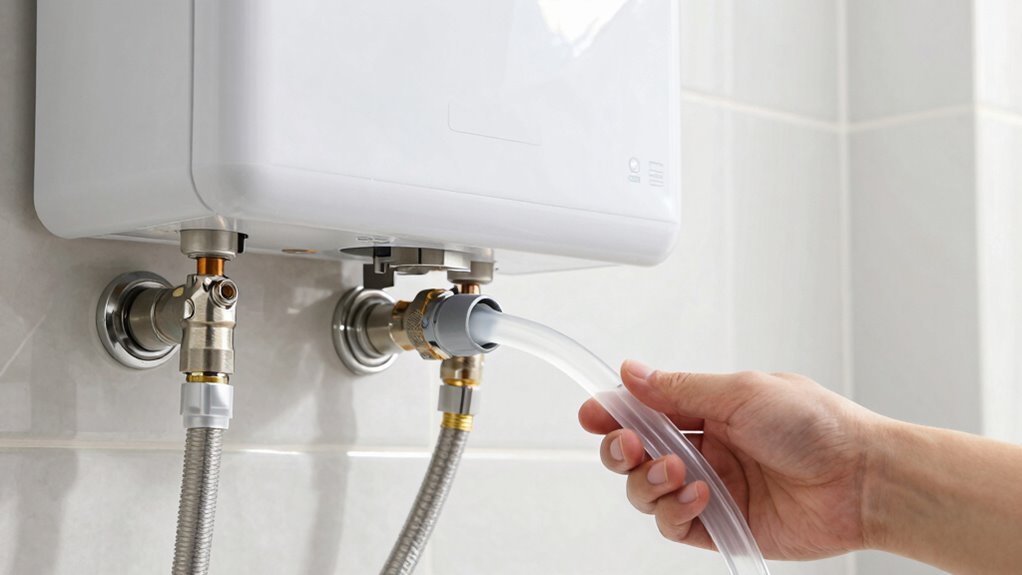
When it comes to the flushing routine itself, start by turning off the power supply and shutting off the water inlet. Connect a garden hose to the unit’s service valves and run the other end to a bucket or drain. Fill the bucket with a mixture of white vinegar and water—usually a 50/50 blend—since vinegar effectively dissolves mineral deposits. Open the service valves to allow the vinegar solution to circulate through the heat exchanger. Let it sit for about 45 minutes to an hour, depending on how much buildup there is. After that, flush the system with clean water to remove any residual vinegar and loosened deposits. Finally, close the valves, restore power, and turn the water supply back on.
Performing this flushing routine at least once a year keeps your tankless water heater operating efficiently. Remember, routine maintenance not only prevents failures but also saves you money on repairs and replacements down the line. By paying attention to installation considerations and sticking to a regular flushing schedule, you ensure your hot water system remains reliable and energy-efficient for years to come.
Frequently Asked Questions
How Often Should I Flush My Tankless Water Heater?
You should flush your tankless water heater at least once a year to maintain peak performance. Regular maintenance schedules depend on your water quality; if you have hard water, consider flushing every six months. Flushing removes mineral buildup that can cause failure, so staying on top of this routine helps extend your heater’s lifespan. Keep an eye on your water quality, and don’t skip this essential maintenance step.
Can I Perform the Flushing Process Myself?
Yes, you can perform the flushing process yourself, especially for DIY maintenance. Just follow the manufacturer’s instructions carefully, and use the right tools and supplies. However, if you’re unsure or uncomfortable, it’s best to opt for professional servicing to guarantee everything’s done correctly and safely. Regular flushing helps prevent mineral buildup, extending your heater’s lifespan and maintaining efficiency.
What Signs Indicate My Heater Needs Flushing?
Did you know that mineral buildup causes over 60% of tankless water heater failures? If you notice inconsistent hot water temperature, reduced flow rate, or strange noises during operation, it’s a sign sediment accumulation is affecting your unit. These issues indicate it’s time to flush your heater. Regular flushing removes mineral deposits, preventing buildup and ensuring efficient, reliable hot water supply.
Are Special Cleaning Products Required for Flushing?
You don’t need special chemical cleaners for flushing your tankless water heater. Most DIY kits come with everything you need, including a vinegar solution or descaling agent, which effectively remove mineral buildup. Just follow the instructions carefully, and avoid harsh chemicals that could damage your unit. Regular flushing with simple solutions helps prevent failure, ensuring your heater runs efficiently and lasts longer.
How Does Flushing Extend the Lifespan of the Heater?
Think of flushing your tankless water heater like giving a car regular oil changes. It prevents corrosion and mineral buildup, which can cause damage over time. By doing routine flushes, you extend the heater’s lifespan, much like how regular maintenance keeps a car running smoothly longer. This simple step helps avoid costly repairs, ensuring your hot water stays reliable and efficient for years to come.
Conclusion
By flushing your tankless water heater regularly, you prevent costly failures and enjoy reliable hot water. It’s a simple routine that saves you money and stress in the long run. Imagine the difference between a sudden cold shower and a steady stream of hot water—your proactive maintenance makes that possible. Don’t wait for problems to arise; take control today. After all, a well-maintained heater keeps your comfort steady, even when neglect threatens to disrupt it.