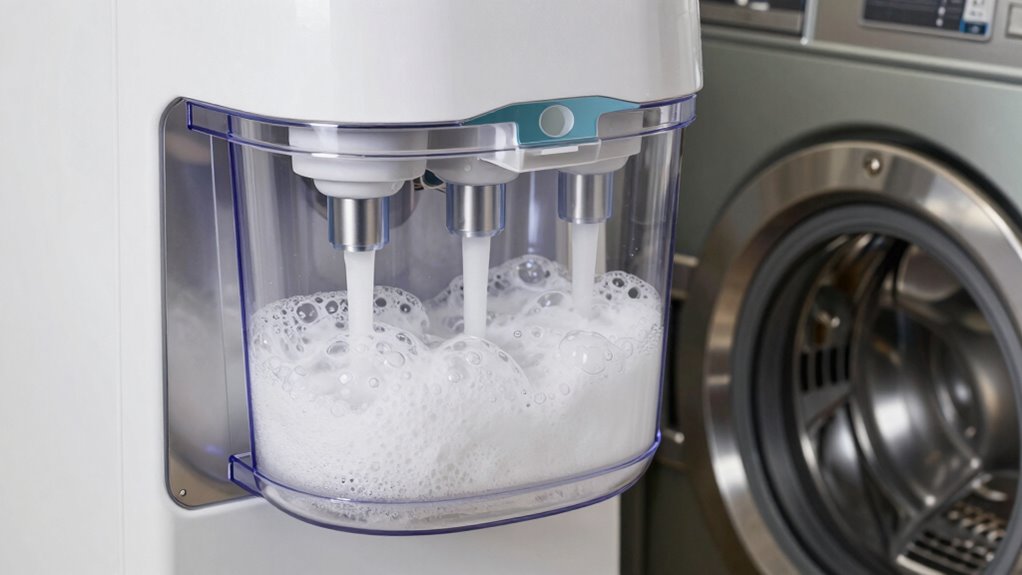
To stop over-sudsing in auto-dispense systems, start by verifying your calibration settings and make certain you’re using the recommended detergent concentration. Incorrect calibration or too much detergent can cause excessive suds, leading to longer rinse cycles and machine issues. Recalibrate regularly and adjust settings when changing detergent brands. Proper maintenance and adherence to manufacturer instructions help prevent over-sudsing and keep your system running smoothly. Keep going to learn more about maintaining peak performance.
Key Takeaways
- Verify and adjust the system calibration according to the detergent’s recommended concentration.
- Use manufacturer guidelines to recalibrate the dispensing system regularly.
- Ensure detergent concentration matches the manufacturer’s specifications to prevent over-sudsing.
- Check sensors or automatic suds detection features and adjust or reset them as needed.
- Switch to a lower concentration detergent if over-sudsing persists despite calibration adjustments.
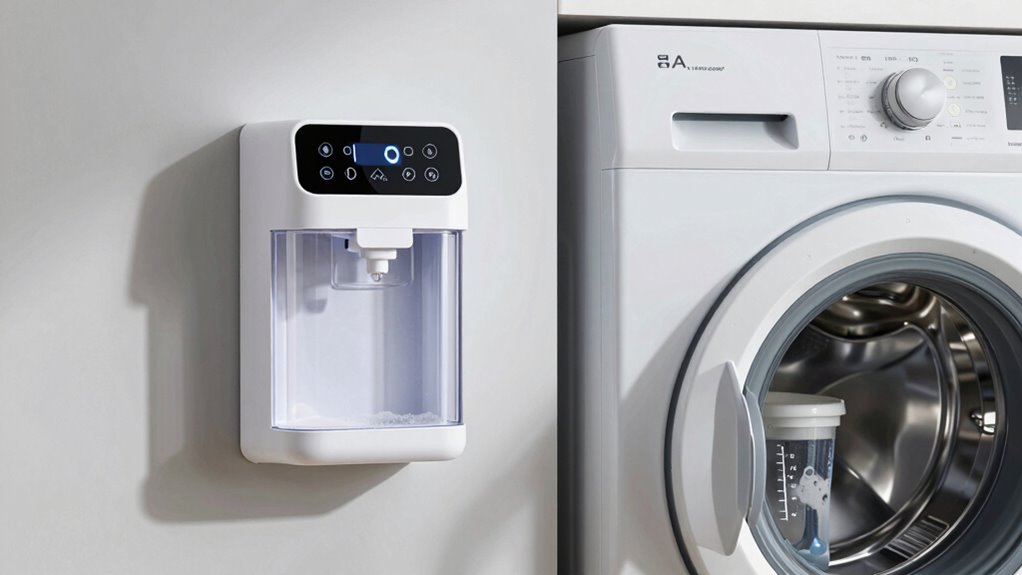
Auto-dispense detergent systems have revolutionized how you manage cleaning routines by delivering the right amount of detergent automatically. This innovation helps prevent the common problem of over-sudsing, which can cause lengthy wash cycles, poor rinsing, and mechanical issues. To keep your system functioning smoothly, it’s vital to pay attention to detergent concentration and system calibration. Proper calibration ensures that the amount of detergent dispensed matches the machine’s requirements, maintaining ideal cleaning performance without excess suds. Additionally, understanding the importance of system calibration is key to optimizing performance and avoiding operational issues.
Auto-dispense systems prevent over-sudsing by ensuring proper detergent calibration and concentration.
When you set up your auto-dispense system, you need to carefully calibrate it according to the detergent’s concentration. If the concentration is too high, the system will dispense more detergent than necessary, leading to over-sudsing. Conversely, if the concentration is too low, cleaning effectiveness might suffer. Regularly checking and adjusting the calibration ensures that the system dispenses the correct amount based on your detergent’s specific formulation. Many systems have calibration procedures built into their controls, allowing you to fine-tune the amount dispensed with simple steps. Always follow the manufacturer’s instructions for calibration to prevent errors.
Another vital factor is understanding how detergent concentration impacts your system’s performance. Detergents come with recommended concentrations for use in auto-dispense systems. Using a detergent that’s too concentrated can cause excessive suds, resulting in longer rinse cycles and potential machine strain. On the other hand, using a diluted detergent may not clean effectively and could lead to buildup over time. Keep a close eye on the detergent’s label and adjust your system settings accordingly. Sometimes, changing brands or formulations requires recalibrating the system to maintain the right balance.
To prevent over-sudsing, always verify that your system is calibrated correctly whenever you change detergents or notice operational issues. Regular maintenance and calibration checks help catch discrepancies early, keeping your equipment running efficiently. If you notice persistent over-sudsing, it might be worth re-evaluating your detergent concentration and recalibrating the system. Many modern auto-dispense units even have sensors that detect suds levels and adjust accordingly, but manual calibration remains a trustworthy way to ensure accuracy.
Frequently Asked Questions
Can Auto-Dispense Systems Work With All Detergent Brands?
Auto-dispense systems generally work with many detergent brands, but you should check detergent compatibility first. Some systems are designed for specific formulas, so brand flexibility may be limited. To guarantee peak performance, use compatible detergents recommended by the manufacturer. If you want to switch brands, verify that the new detergent is compatible with your system to prevent over-sudsing or dispensing issues.
How Often Should I Calibrate My Auto-Dispense System?
You should calibrate your auto-dispense system every 3 to 6 months to guarantee ideal performance. Regular calibration maintains detergent consistency, preventing over- or under-dispensing. Keep an eye on your system’s performance; if you notice issues like over-sudsing or inconsistent cleaning results, calibrate sooner. Following a consistent calibration schedule helps your system work efficiently, saving detergent and ensuring your dishes come out spotless every time.
Are Auto-Dispense Systems Energy-Efficient?
Auto-dispense systems are generally energy-efficient because they optimize detergent use, reducing waste and unnecessary energy consumption. By dispensing exactly the right amount of detergent, they minimize environmental impact and lower overall energy costs. You’ll find that these systems help conserve water and energy, making them a smart choice for eco-conscious facilities. Proper calibration and maintenance further enhance their efficiency, ensuring you get the most benefit while reducing your environmental footprint.
What Maintenance Is Required for Long-Term Use?
To guarantee long-term use, you should regularly check detergent compatibility and clean the dispensing components to prevent clogs. Calibrate the system according to the manufacturer’s recommended frequency, usually every few months, to maintain accuracy. Keep an eye on the detergent levels and refill as needed. Performing these simple maintenance tasks helps prevent over-sudsing, prolongs system life, and keeps your auto-dispense system functioning efficiently.
Can Auto-Dispense Systems Be Integrated With Smart Home Devices?
Yes, auto-dispense systems can be integrated with smart home devices. You can connect them through smart home platforms for seamless automation. With voice control, you can easily operate your system using commands like “start the dishwasher” or “pause the cycle.” This integration makes managing your appliances more convenient, allowing you to control and monitor your auto-dispense system remotely, enhancing efficiency and user experience.
Conclusion
To keep your auto-dispense system running smoothly, always follow the manufacturer’s instructions and measure your detergent carefully. Regularly check and clean the dispenser to prevent buildup that can cause over-sudsing. Remember, a stitch in time saves nine—taking a few simple steps now will save you headaches later. By staying vigilant and maintaining your system, you can enjoy spotless laundry without the fuss or mess. Keep things flowing smoothly, and your clothes will thank you!