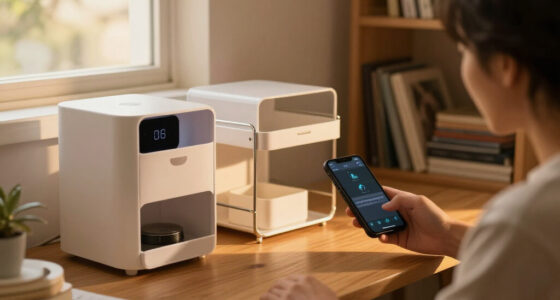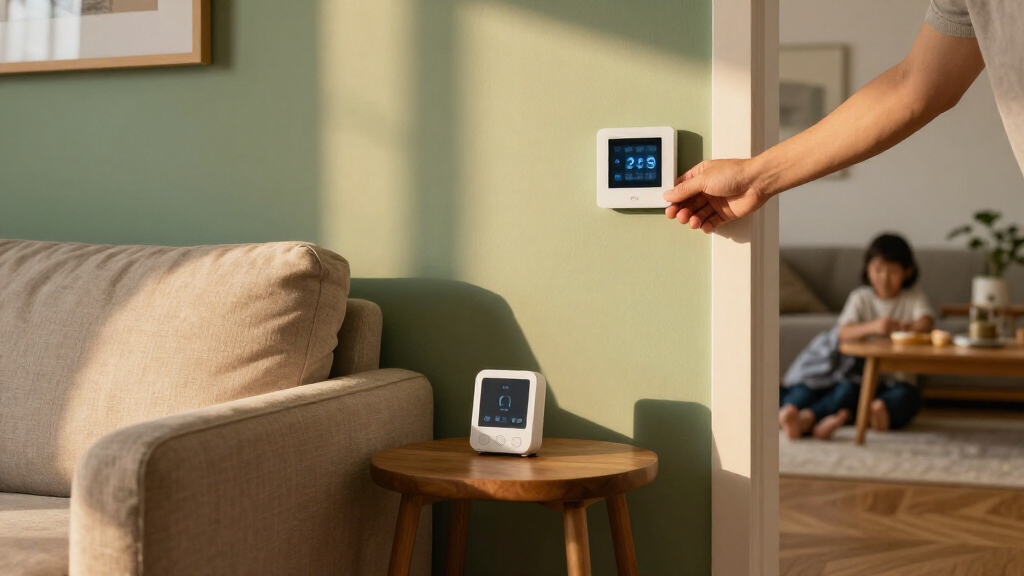

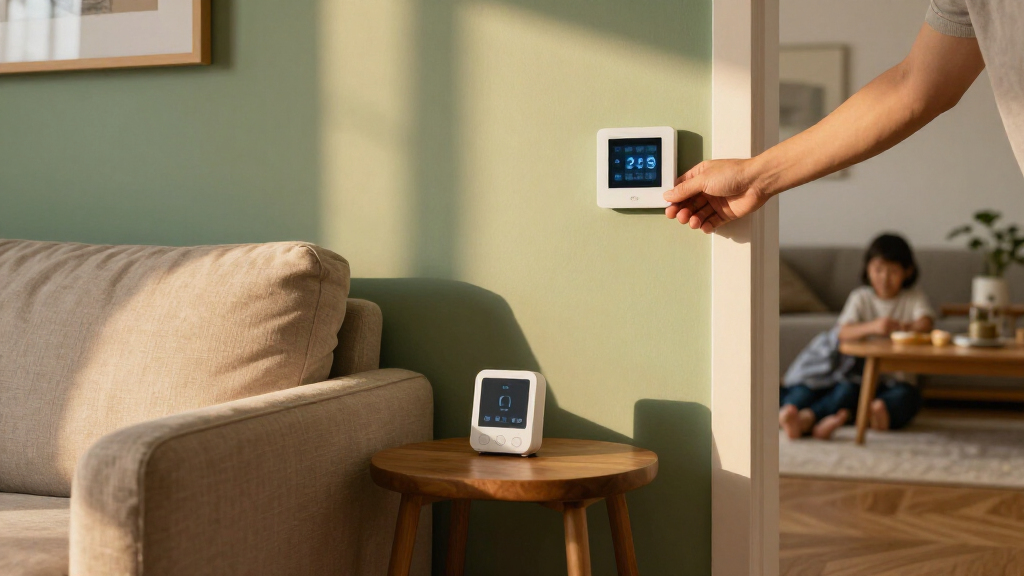
If one room in your house is always freezing while another feels like a sauna, a plain smart thermostat won’t solve the problem on its own. What you need is a model that pairs the thermostat with remote room sensors, so the system can read conditions where you actually sit, sleep, and work instead of only in the hallway where the thermostat hangs. After comparing the current field, my top pick is the Google Nest Learning Thermostat (4th Gen) with Nest Temperature Sensor, because its automatic schedules do the tuning work most people never get around to doing themselves. For buyers who want a big, information-rich screen and air quality monitoring, the Honeywell Home X8S Premium is the stronger choice, while the Honeywell Home ElitePRO S1200 wins for complex HVAC setups that support up to 20 sensors. The main tradeoff you’re navigating in this category is simple: smarter automation versus deeper hardware control, and whether your system has the C-wire that two of these models demand.

Get home appliances delivered free with Prime
- Fast, free delivery on millions of items
- Prime Video, Amazon Music and more included
- Member-only deals all year
Complete the kit


![[Genuine] Waterdrop PF-01A Water Filter Replacement for W...](https://m.media-amazon.com/images/I/41+5tl9EiKL._SX342_SY445_QL70_FMwebp_.jpg)
Key Takeaways
- The Nest Learning Thermostat (4th Gen) earns my top spot because self-programming schedules plus an included sensor deliver comfort with the least day-to-day effort.
- The Honeywell Home X8S and ElitePRO S1200 both require a C-wire, while the Nest works in most homes without one — a deciding factor for older houses.
- Only the ElitePRO S1200 supports up to 20 room sensors, making it the clear pick for large homes or light-commercial spaces with many hot and cold spots.
- The TQX Matter thermostat is the budget-friendly option for smart-home enthusiasts, but its sensors average readings rather than controlling individual rooms.
- Occupancy detection separates the field: the TQX and ElitePRO sense motion directly, while the Nest sensor only reports temperature back to the thermostat.
| Google Nest Learning Thermostat (4th Gen) with Nest Temperature Sensor (2nd Gen), Obsidian |  | Best Overall | Generation: 4th gen | Included sensor: Nest Temperature Sensor, 2nd gen | Display: 60% larger than previous generation | VIEW LATEST PRICE | See Our Full Breakdown |
| Honeywell Home X8S Premium Smart Wi-Fi Thermostat with Room Sensor, Black |  | Best Premium Display | Display: 5-inch touchscreen | Included accessory: Wireless room sensor, up to 200 ft range | Smart home compatibility: Matter, Amazon Alexa, Google Assistant, Apple Home | VIEW LATEST PRICE | See Our Full Breakdown |
| Honeywell Home ElitePRO S1200 Smart Thermostat with Room Sensor, White |  | Best for Complex HVAC Systems | Model: YTHX1200W5/U | Included room sensor: C7189R3010, one | Sensor support: Up to 20 sensors | VIEW LATEST PRICE | See Our Full Breakdown |
| TQX Matter Wi-Fi Thermostat with Occupancy Detection and Remote Sensor Support |  | Best Value for Smart Home Builders | Connectivity: Matter via compatible smart-home speaker | Occupancy detection: Millimeter-wave sensor with occupancy learning | Remote sensors: Up to 5 QSZ Remote Sensors | VIEW LATEST PRICE | See Our Full Breakdown |
| smart thermostats with room sensor | Display | Smart home compatibility | Color | Connectivity |
|---|---|---|---|---|
| Google Nest Learning Thermosta | 60% larger than previous generation | Matter, Google Assistant, Alexa, Siri | Obsidian | — |
| Honeywell Home X8S Premium Sma | 5-inch touchscreen | Matter, Amazon Alexa, Google Assistant, Apple Home | Black | — |
| Honeywell Home ElitePRO S1200 | 5-inch color touchscreen | — | — | Dual-band Wi-Fi, Bluetooth, Matter |
| TQX Matter Wi-Fi Thermostat wi | — | — | — | Matter via compatible smart-home speaker |
More Details on Our Top Picks
Google Nest Learning Thermostat (4th Gen) with Nest Temperature Sensor (2nd Gen), Obsidian
The reason this model sits at the top of my list has little to do with hardware specs and everything to do with behavior. Most room-sensor thermostats give you the tools to fix hot and cold spots but leave the scheduling, trimming, and seasonal adjustment to you. The Nest Learning Thermostat flips that arrangement: it studies the temperatures you prefer, notices when you leave, and rebuilds its own schedule as your routine changes. Pair that with the included second-generation Nest Temperature Sensor, and you get a system that automatically prioritizes, say, the nursery at bedtime and the living room on weekend afternoons without you touching an app.
Compared with the Honeywell Home X8S, the Nest asks far less of your wiring. It runs on most 24V systems without a C-wire, which matters enormously if you own an older home where fishing new wire through plaster walls is a weekend project nobody wants. The tradeoff cuts the other way on raw capability: the Nest supports a single ecosystem of Nest sensors and offers no air quality monitoring, while the X8S tracks VOCs and humidity and displays doorbell video. The 4th-gen display is 60% larger than the previous generation’s, and its mirrored finish disappears into the wall when idle — an aesthetic choice the black X8S screen can’t match.
The other compromise to weigh is software dependence. Some advanced controls and schedule adjustments live entirely in the Google Home app, so if you prefer turning dials and pressing buttons on the wall itself, the Honeywell models give you more on-device control. Still, for the majority of homeowners who want comfort problems solved rather than managed, this pick makes the most sense.
Pros:- Learns preferred temperatures and adapts schedules automatically as routines change
- Includes a Nest Temperature Sensor (2nd gen) out of the box for managing hot and cold spots
- Works with most 24V systems without requiring a C-wire in most homes
- Supports Matter, Google Assistant, Alexa, and Siri for flexible smart home control
Cons:- HVAC compatibility still needs checking for specific systems before purchase
- Advanced controls and schedule adjustments depend on the Google Home app
Best for: Homeowners who want self-programming comfort with minimal setup effort and balanced room temperatures without micromanaging an app
Not ideal for: Buyers who need air quality monitoring, extensive on-device controls, or more than a handful of room sensors across a very large property
- Generation:4th gen
- Included sensor:Nest Temperature Sensor, 2nd gen
- Display:60% larger than previous generation
- System compatibility:Most 24V systems including gas, electric, oil, forced air, heat pump, radiant
- C-wire:Not required in most homes
- Smart home compatibility:Matter, Google Assistant, Alexa, Siri
- Control:Google Home app and compatible voice assistants
- Color:Obsidian
Our verdict“The best blend of automation, compatibility, and included sensing for typical homes that I can recommend without hesitation.”
Honeywell Home X8S Premium Smart Wi-Fi Thermostat with Room Sensor, Black
Where the Nest wins on brains, the X8S Premium wins on presence. Its 5-inch customizable touchscreen is the closest thing in this lineup to a wall-mounted command center, and unlike the Nest’s reflective minimalism, this display is built to be read, rearranged, and used. That matters more than it sounds: temperature, humidity, air quality readings, and even a live feed from a compatible First Alert VX1 or Ring video doorbell can all appear on one screen, which means fewer app check-ins throughout the day.
The included wireless room sensor reaches up to 200 feet and gives the X8S the targeted comfort capability this roundup exists for. Compared with the ElitePRO S1200 from the same family, the X8S takes a friendlier path to installation: a C-wire adapter voucher is included if your wiring needs one, while the ElitePRO makes you buy that adapter separately. The ElitePRO pulls ahead on expandability — it supports up to 20 sensors versus the X8S’s more modest ceiling — and handles 4-heat/2-cool heat pumps where the X8S tops out at 3 heat/2 cool. For a typical single-family home, though, that gap rarely matters.
Two honest drawbacks temper the premium experience. The X8S won’t work with 120–240V electric baseboard heat, so apartment dwellers with baseboard systems need to look elsewhere entirely. And some of the air quality features assume you have compatible HVAC equipment or are willing to buy accessories to act on what the thermostat measures. If you want a thermostat that watches your indoor environment as closely as your temperature, this is the model that justifies its premium positioning; if you just want scheduled comfort, the Nest does that for less involvement and less wiring drama.
Pros:- Large, customizable 5-inch touchscreen that’s easy to read and interact with
- Includes a wireless room sensor with range up to 200 ft for targeted comfort
- Monitors and controls indoor air quality alongside temperature
- Streams video from compatible First Alert VX1 and Ring doorbells
Cons:- Not compatible with 120–240V electric baseboard heat
- Requires a C-wire, though an adapter voucher is included if needed
- Some air quality features require additional HVAC equipment or accessories
Best for: Owners of modern central HVAC systems who want a large interactive display, air quality insight, and doorbell video on the wall
Not ideal for: Homes with 120–240V baseboard heat, or buyers unwilling to deal with C-wire requirements even with the adapter voucher
- Display:5-inch touchscreen
- Included accessory:Wireless room sensor, up to 200 ft range
- Smart home compatibility:Matter, Amazon Alexa, Google Assistant, Apple Home
- Doorbell compatibility:First Alert VX1 and Ring streaming doorbells
- Supported HVAC systems:Up to 3H/2C heat pump with electric backup, or 2H/2C conventional
- Wi-Fi:2.4 or 5 GHz; 802.11ax/ac/a/b/g/n
- Wiring:C-wire required; adapter voucher included if needed
- Certification:ENERGY STAR certified
- Color:Black
Our verdict“The richest on-wall experience in this comparison, best suited to buyers who see their thermostat as a home hub rather than a dial.”
Honeywell Home ElitePRO S1200 Smart Thermostat with Room Sensor, White
Every roundup needs a specialist, and the ElitePRO S1200 is this one’s. Its defining strength is scale: it accepts up to 20 wireless room sensors, each reporting temperature, humidity, and motion. No other thermostat here comes close on expandability, and that headroom transforms what room sensing can do. Instead of smoothing over two problem rooms, a large house — or a light-commercial space like a small office or clinic — can build a genuine comfort map, with occupancy data telling the system which zones actually need conditioning at different times of day.
On the hardware side, the S1200 handles configurations that eliminate the rest of the field: up to 4 heat/2 cool heat pumps and 3H/3C conventional systems, plus control for up to two indoor air quality devices. The X8S shares the family resemblance — same 5-inch touchscreen, same doorbell streaming, same Matter support — but the ElitePRO is aimed at the installer and the demanding system rather than the everyday homeowner. That distinction shows in the friction points: the C-wire is mandatory and the adapter is sold separately, the included sensor count is just one, and air quality accessories plus compatible doorbells all cost extra.
Occupancy monitoring with humidity, VOC, and estimated CO2 readings makes this the most instrumented option in the lineup, and for anyone managing a complicated system, that data density is the point. Compared with the Nest, you give up automatic learning and gain manual precision; compared with the TQX, you give up budget pricing and gain genuine multi-room sensing depth. Buyers with simple single-stage furnaces should honestly skip it — the Nest or X8S will do the same job with less wiring and less expense.
Pros:- Supports up to 20 room sensors with temperature, humidity, and motion detection
- Handles up to 4H/2C heat pumps and 3H/3C conventional systems
- Monitors humidity, VOCs, and estimated CO2 with control for two IAQ devices
- Streams compatible Ring and First Alert doorbell video with Matter support
Cons:- C-wire required, and the adapter is sold separately
- Doorbells and some indoor air quality accessories are not included
- 5-inch touchscreen system is more than most simple homes need
Best for: Owners of large homes, multi-stage heat pumps, or light-commercial spaces who want deep sensor expandability and air quality control
Not ideal for: Homes with simple single-stage systems, or buyers without an existing C-wire who don’t want to purchase an adapter separately
- Model:YTHX1200W5/U
- Included room sensor:C7189R3010, one
- Sensor support:Up to 20 sensors
- Display:5-inch color touchscreen
- Heat pump capacity:Up to 4 heat / 2 cool
- Conventional capacity:Up to 3 heat / 3 cool
- Air quality monitoring:Humidity, VOCs, estimated CO2
- Connectivity:Dual-band Wi-Fi, Bluetooth, Matter
- Power:24 VAC, C-wire required
Our verdict“The pro-grade powerhouse for complicated systems — overkill for a bungalow, indispensable for a property the other picks can’t cover.”
TQX Matter Wi-Fi Thermostat with Occupancy Detection and Remote Sensor Support
The TQX Matter thermostat plays a different game than everything above it. Rather than building its own app, scheduling intelligence, and cloud platform, it plugs directly into the smart home you already own: control is local or remote through your existing app, courtesy of Matter via a compatible smart-home speaker. For anyone deep in the Apple Home, Google Home, or Alexa ecosystem, that architecture feels clean and modern — no extra accounts, no separate portal, and sensor data that other automations can use for lighting and security, not just temperature.
Its standout hardware feature is the millimeter-wave occupancy sensor with occupancy learning. The display brightens or sleeps based on whether anyone is in the room, and the system learns patterns of presence over time. Combined with support for up to five QSZ remote sensors, the TQX gathers genuinely useful whole-home data. The catch, and it’s the reason this model ranks fourth despite strong fundamentals, is how that data gets used: sensor readings are averaged into the overall temperature adjustment, and individual sensors cannot regulate individual rooms. Compare that with the Honeywell models, where sensors with motion detection can steer comfort toward occupied areas, and the limitation becomes clear.
Compatibility is broader than its price position suggests — up to 4H/2C heat pumps, 2H/2C conventional, PTAC units, and 2-pipe or 4-pipe fan coils, plus auxiliary outputs for humidification, dehumidification, or ventilation. Line-voltage baseboard systems are off the table. If your priority is an affordable Matter-native thermostat that shares occupancy data with the rest of your smart home, this option stands out for value; if you’re buying specifically to fix one problem room, its averaged approach will disappoint compared with every other pick here.
Pros:- Local and remote control through your existing smart home app via Matter
- Millimeter-wave occupancy detection with learning and adaptive display behavior
- Supports up to five QSZ remote sensors for whole-home data
- Broad compatibility including heat pumps, PTAC, and 2- or 4-pipe fan coil systems
Cons:- Requires a Matter-enabled smart-home speaker for internet connectivity
- Remote sensors combine data and do not control individual rooms independently
- Not compatible with 120V or 240V line-voltage systems
Best for: Smart home enthusiasts who want a Matter-native thermostat that shares occupancy and temperature data with broader automations at a lower cost
Not ideal for: Buyers hoping for true room-by-room control, or anyone without a Matter-enabled smart-home speaker for connectivity
- Connectivity:Matter via compatible smart-home speaker
- Occupancy detection:Millimeter-wave sensor with occupancy learning
- Remote sensors:Up to 5 QSZ Remote Sensors
- Heat pump compatibility:Up to 4 heat / 2 cool stages
- Conventional compatibility:Up to 2 heat / 2 cool stages
- Other systems:PTAC; 2-pipe or 4-pipe fan coil
- Auxiliary outputs:Up to 2 for humidification, dehumidification, or ventilation
- Room control:Combines sensor data; no independent per-room regulation
Our verdict“A value-focused pick for ecosystem-first buyers, with sensor averaging being the compromise that keeps it from ranking higher.”
How We Picked
My selection process started by filtering the market down to models that actually include a room sensor in the box, since a thermostat that merely supports optional sensors leaves you with a hidden second purchase. From there, I judged each finalist on sensor capability — how many sensors it supports, whether they detect humidity and occupancy or just temperature, and how the system uses that data to balance comfort across rooms. Because a room-sensing thermostat only helps if it can talk to your equipment, I weighed HVAC compatibility heavily, including C-wire requirements, heat pump staging, and support for fan coil or PTAC systems that rule out most mainstream models. I also compared smart home integration, favoring Matter support and cross-platform compatibility over single-ecosystem lock-in. Finally, I factored in the total ownership picture: which accessories are included, which are sold separately, and how much ongoing effort each system demands from the owner once it’s mounted on the wall.
| smart thermostats with room sensor | Smart home compatibility | Color | Connectivity |
|---|---|---|---|
| Google Nest Learning Thermosta | Matter, Google Assistant, Alexa, Siri | Obsidian | — |
| Honeywell Home X8S Premium Sma | Matter, Amazon Alexa, Google Assistant, Apple Home | Black | — |
| Honeywell Home ElitePRO S1200 | — | — | Dual-band Wi-Fi, Bluetooth, Matter |
| TQX Matter Wi-Fi Thermostat wi | — | — | Matter via compatible smart-home speaker |
Factors to Consider When Choosing Smart Thermostats With Room Sensors
Room-sensing thermostats vary more than their marketing suggests. Before choosing, I’d walk through these five questions, because the answers eliminate most of the field on their own.How the System Uses Sensor Data
This is the single most misunderstood point in the category. Some thermostats, like the Honeywell models, let sensors with motion detection steer comfort toward occupied rooms. Others, like the TQX, average readings from all sensors into one whole-home adjustment. The first approach fixes specific problem rooms; the second smooths overall comfort. Know which behavior you’re buying, because a box that says “remote sensor support” doesn’t tell you which one you’re getting.
Wiring and Power Requirements
The C-wire question splits this lineup in half. The X8S and ElitePRO S1200 both require constant 24V power — the X8S at least includes an adapter voucher, while the ElitePRO makes you buy one separately. The Nest runs on most 24V systems without a C-wire at all. If your current thermostat has only two wires running to it, factor installation complexity into your decision before anything else, because no feature set compensates for a thermostat that can’t power on.
HVAC Compatibility
Stage count matters more than brand loyalty. The ElitePRO handles up to 4 heat/2 cool heat pumps and 3H/3C conventional systems; the X8S caps at 3H/2C; the TQX covers heat pumps, PTAC, and fan coils; the Nest covers most common 24V equipment. None of these work with 120–240V line-voltage baseboard heat, so apartment and condo owners should confirm their heating type before falling in love with any model. When in doubt, check the manufacturer’s compatibility tool before ordering.
Sensor Expandability
One included sensor covers one problem room, but homes rarely have just one. The ElitePRO’s support for up to 20 sensors dwarfs the TQX’s five and the more limited ecosystems of the Nest and X8S. Think about where your hot and cold spots are now — bedrooms upstairs, a sun-sooked den, a drafty office — and buy headroom accordingly. Extra sensors are a modest ongoing cost, but only if your thermostat can accept them.
Smart Home Ecosystem Fit
All four picks support Matter to some degree, but the experience differs. The TQX is ecosystem-native, leaning entirely on your smart-home speaker and app for connectivity and automation. The Nest routes everything through Google Home, the Honeywell models offer the broadest native platform support, and the X8S adds doorbell video streaming on top. Match the thermostat to the platform you already live in, not the one a reviewer prefers.
Frequently Asked Questions
Do room sensors actually control the temperature in individual rooms?
Not in most cases, and this is the most common misconception in the category. A standard smart thermostat with room sensors reads conditions from multiple rooms and then decides how to run the single HVAC system serving the whole house. Sensors that detect occupancy, like those included with the Honeywell models or built into the TQX, can tell the system to prioritize rooms where people actually are — which is the closest most homes get to zoned control without adding zone dampers. The TQX is explicit that its sensors average into overall temperature rather than regulating rooms independently, so if true room-by-room control is the goal, you need either occupancy-aware sensors or a fully zoned HVAC system installed by a professional.
How many room sensors do I need for my home?
A practical starting rule is one sensor for each room where comfort problems exist or where you spend predictable blocks of time — typically bedrooms, a home office, or a living area that runs hot or cold. One included sensor, as the Nest and both Honeywell models provide, handles a single problem room well. Homes with multiple floors or widely varying sun exposure usually benefit from three to five sensors, which is why the TQX’s five-sensor ceiling and the ElitePRO’s twenty-sensor ceiling matter. Beyond that, remember that more sensors improve the accuracy of the comfort picture but can’t overcome a single-stage system’s physical limits — a furnace that’s either fully on or fully off can only do so much with better information.
What happens if my home doesn’t have a C-wire?
Two of these thermostats simply won’t power reliably without one. The Honeywell Home X8S requires a C-wire but includes a voucher for an adapter, which pulls constant power from existing wires and typically makes installation straightforward. The ElitePRO S1200 requires a C-wire too, and its adapter is a separate purchase — an annoyance that adds real cost and an extra installation step. The Google Nest Learning Thermostat is the friendliest option here, working on most 24V systems without a C-wire at all. If your current thermostat runs on two wires and you’re not comfortable doing electrical work, the Nest or a professional installation are your realistic paths.
Is the Nest’s learning actually worth it compared to manual scheduling?
For most buyers, yes, because the honest truth is that most people never build or maintain a heating and cooling schedule. Manual scheduling works well in theory — you program setbacks for work hours and sleeping hours — but routines drift, seasons change, and the schedule goes stale. The Nest’s approach of observing the temperatures you actually choose and rebuilding its own program means the optimization keeps happening without your attention, and its energy-saving features compound over months. The tradeoff is that the learning lives in the Google Home app, so if you dislike app-dependent control or prefer the hands-on scheduling of the Honeywell models, the automation becomes a drawback rather than a benefit.
Can a smart thermostat with room sensors work with baseboard heating?
Generally no, and I’d flag this early if you live in an apartment or older home. High-voltage electric baseboard systems run on 120V or 240V line voltage, and none of the four thermostats in this comparison support it — the X8S and TQX both state this exclusion explicitly. These models are designed for 24V low-voltage systems: furnaces, heat pumps, fan coils, and PTAC units in the TQX’s case. Baseboard owners need thermostats built specifically for line-voltage loads, and that product category currently offers far less in the way of room sensing, so it’s worth confirming your heating type before comparing features at all.
Conclusion
Matching the right thermostat to your situation comes down to three questions: how complicated is your HVAC system, how many rooms need help, and how much control do you want to hand over? For most homeowners, the Google Nest Learning Thermostat (4th Gen) is the answer — it learns your habits, ships with a sensor, and skips the C-wire headache. If you’re a data-oriented buyer who wants air quality readings, doorbell video, and a large interactive display on the wall, the Honeywell Home X8S Premium earns its premium billing. The ElitePRO S1200 belongs to owners of large or light-commercial properties with multi-stage systems, where its 20-sensor ceiling and pro-grade staging support justify the extra cost and stricter wiring demands. Finally, smart-home enthusiasts building Matter-first setups on a budget will find the TQX a capable, ecosystem-native option — provided they accept that its sensors inform the whole home rather than commanding individual rooms. Whatever you choose, verify HVAC compatibility before you buy; it’s the one mistake in this category that no feature set can fix.
Fall yard work Picks
leaf blowers
As an affiliate, we earn on qualifying purchases.