
Activated carbon filters are great at removing many airborne pollutants, but smoke presents unique challenges. Smoke contains tiny particles, tar, and complex chemicals that can clog or pass through standard filters. To effectively tackle smoke, you need specialized filters that combine activated carbon with HEPA technology or other enhancements. These advanced filters target both odor-causing gases and microscopic particles, ensuring better air quality. Keep exploring to discover how different filters work together to combat stubborn smoke issues.
Key Takeaways
- Smoke contains tiny particles and complex chemicals that standard activated carbon filters may not effectively trap.
- Smoke’s microscopic particles can pass through or clog regular filters, reducing filtration efficiency.
- Specialized smoke filters combine activated carbon with HEPA or other technologies for comprehensive removal.
- VOCs in smoke require tailored adsorption techniques that differ from simple odor elimination.
- Using a dedicated smoke filter improves air quality, safety, and reduces lingering odors more effectively.
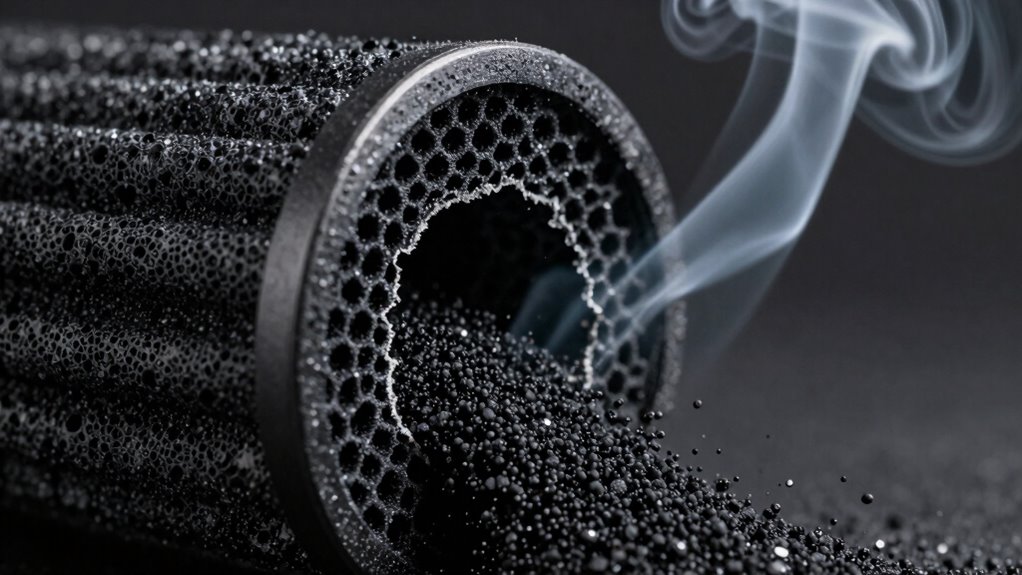
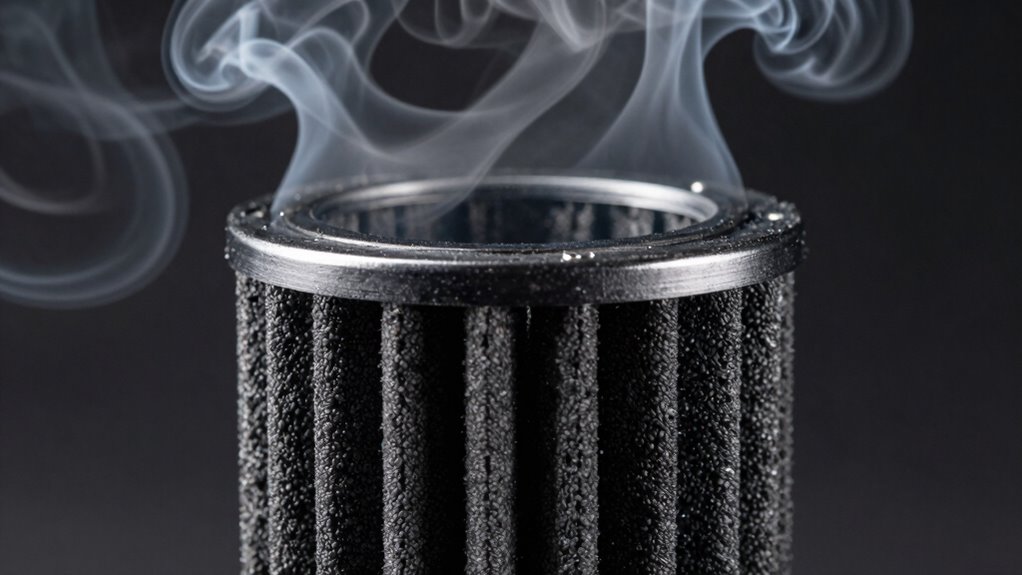
Activated carbon filters are highly effective devices that remove impurities and contaminants from water and air. They work by trapping particles and chemicals within their porous structure, making them essential for improving air quality and water purity. When it comes to air purification, especially dealing with odors and volatile organic compounds (VOCs), these filters excel because of their ability to adsorb these substances. VOC adsorption is a key feature, meaning the activated carbon captures gaseous compounds emitted by various sources, including smoke, fumes, and chemicals. This process considerably reduces the presence of harmful or unpleasant odors, making indoor environments more comfortable and safe.
However, not all filters are created equal, especially when it comes to smoke. While activated carbon filters are excellent at odor elimination, smoke presents unique challenges that require specialized filtering. Smoke contains tiny particles, tar, and a complex mixture of chemical compounds, many of which are VOCs. These VOCs are responsible for the strong, lingering smell of smoke and can also be harmful to breathe in. Regular activated carbon filters can adsorb many of these VOCs, but smoke particles are often so fine that they can pass through or clog standard filters quickly. This is why smoke needs a different or enhanced filtering approach.
For ideal smoke removal, filters often incorporate additional layers or technologies designed specifically for particulates. HEPA filters, for example, work alongside activated carbon to capture fine smoke particles that carbon alone might miss. The combination ensures both odor elimination and particulate removal. In situations where smoke is a persistent issue, such as in homes with smokers or areas affected by wildfires, using a filter designed explicitly for smoke becomes vital. These specialized filters not only adsorb the VOCs responsible for the smell but also trap the microscopic particles that can penetrate standard activated carbon filters. Moreover, understanding the contrast ratio of a filter can help determine its effectiveness in different environments.
Frequently Asked Questions
How Long Do Activated Carbon Filters Typically Last Before Replacement?
You can expect activated carbon filters to last about 3 to 6 months before needing replacement. The filter lifespan depends on usage, air quality, and smoke levels. To guarantee ideal performance, monitor for signs like reduced odor absorption or a noticeable decrease in air quality. Regular replacement frequency helps maintain effective smoke filtration, so check your filter periodically and swap it out when it’s nearing the end of its lifespan.
Can Activated Carbon Filters Remove All Types of Smoke Odors?
Did you know activated carbon filters can remove up to 90% of certain smoke odors? You should know that they excel at odor absorption efficiency and smoke particle filtration, but they might not eliminate all types of smoke odors completely. Some odors, especially from complex or chemical sources, require specialized filters. So, while activated carbon filters are effective, for the best results, consider combining them with other filtration methods.
Are There Specific Filters Designed Exclusively for Cigarette Smoke?
Yes, there are specialized cigarette filters and tailored smoke filters designed specifically for cigarette smoke. These filters target the unique chemicals and tar found in tobacco, providing more effective odor and particle reduction. You should look for filters labeled for cigarette or tobacco smoke, as they often incorporate additional filtering media or design features that standard activated carbon filters lack. Using these specialized options can markedly improve indoor air quality.
How Do Activated Carbon Filters Compare to HEPA Filters for Smoke Removal?
You’ll find that activated carbon filters excel at removing smoke because of their high adsorption capacity, which traps odor-causing molecules effectively. HEPA filters, on the other hand, primarily capture airborne particles like ash and tar but don’t absorb gases as well. So, for smoke, activated carbon filters are more efficient due to their specialized filter material designed specifically for odor and gas removal.
Do Activated Carbon Filters Require Special Maintenance When Used for Smoke?
Yes, activated carbon filters require special maintenance when used for smoke. You need to monitor filter saturation because smoke particles and chemicals can quickly fill the pores, reducing effectiveness. Regular replacement is essential, and some filters can undergo chemical regeneration to extend their lifespan. This process refreshes the carbon’s ability to absorb smoke chemicals, ensuring your filter stays effective longer. Keep an eye on usage and follow manufacturer recommendations for ideal performance.
Conclusion
Think of activated carbon filters like a sponge soaking up a spill. When your friend smoked in their car, the smell lingered for days—until they installed a specialized filter. Just like that sponge, activated carbon absorbs odors and chemicals that regular filters miss. If you want fresh air and no lingering smoke, you need a filter designed for it. Without it, you’re just trapping the problem, not solving it. Choose the right filter and breathe easier.