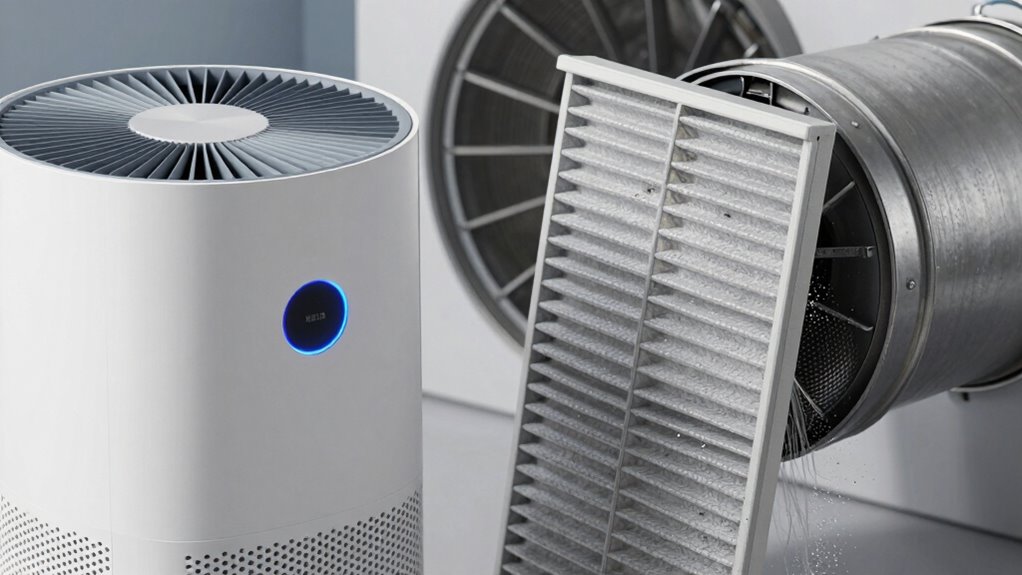
A HEPA air purifier targets specific rooms, capturing up to 99.97% of tiny particles like allergens, pet dander, and smoke, making the air cleaner where you need it most. In contrast, HVAC filters are installed within your system, providing whole-home filtration by removing larger and smaller particles as air circulates through the entire house. Understanding how each works helps you choose the right solution—keep exploring to discover more about their roles.
Key Takeaways
- HEPA purifiers target specific rooms, capturing 99.97% of tiny particles like allergens and smoke independently of HVAC systems.
- HVAC filters are installed within your heating and cooling system, improving overall home air quality based on their MERV rating.
- HEPA units excel at removing microscopic airborne contaminants directly from the air in localized spaces.
- HVAC filters provide continuous filtration throughout the entire house, depending on filter quality and regular maintenance.
- Proper upkeep of both systems ensures optimal filtration performance and helps maintain healthy indoor air quality.
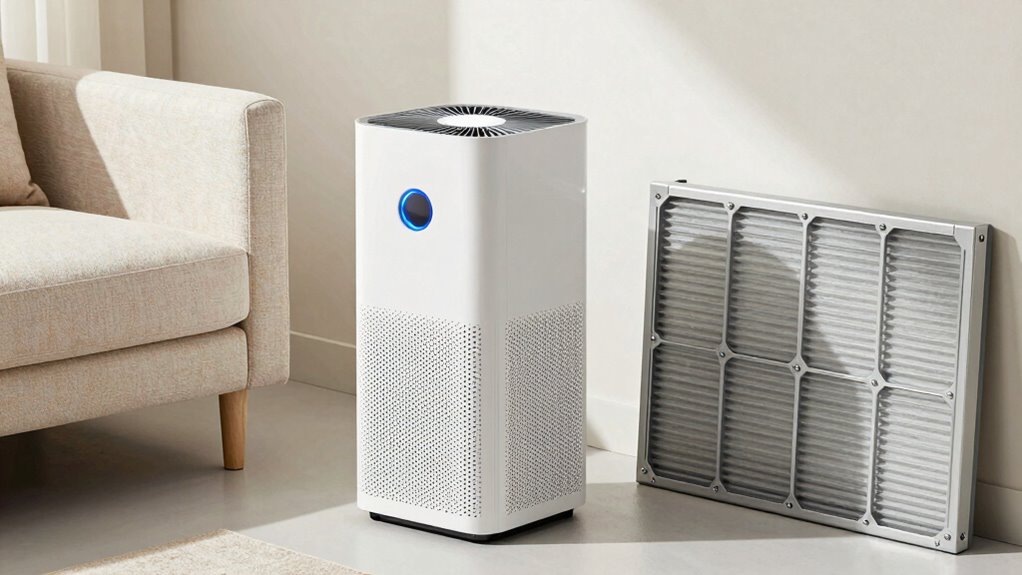
When it comes to improving indoor air quality, understanding the differences between a HEPA air purifier and an HVAC filter is essential. Both are designed to clean the air you breathe, but they do so in different ways and with varying levels of effectiveness. One of the primary factors to consider is air filtration effectiveness. HEPA air purifiers are built to capture tiny particles—up to 99.97% of particles as small as 0.3 microns. This means they excel at removing allergens, pet dander, mold spores, and tobacco smoke directly from the air in a specific room. They work independently of your heating or cooling system, providing targeted air cleaning in spaces where you spend a lot of time. On the other hand, HVAC filters are installed within your heating, ventilation, and air conditioning system. Their effectiveness depends on the filter’s MERV rating, with higher ratings capturing smaller particles. While a high-quality HVAC filter can improve overall air quality throughout your entire home, it may not be as efficient at removing microscopic particles compared to a dedicated HEPA purifier. Regularly changing your HVAC filter is also crucial to prevent reduced airflow and maintain filtration performance, as filter maintenance directly impacts your home’s air quality.
Frequently Asked Questions
Can Both HEPA Purifiers and HVAC Filters Remove Allergens Simultaneously?
Yes, both HEPA purifiers and HVAC filters can remove allergens simultaneously if you optimize airflow and guarantee filter compatibility. By maintaining proper airflow, you allow air to pass through both systems efficiently, maximizing allergen removal. Make sure your HVAC filter is compatible with your system’s specifications, and use a HEPA purifier in high-traffic or allergy-prone areas for enhanced protection. Together, they create a thorough allergen defense.
How Often Should I Replace or Clean Each Type of Filter?
You should replace or clean your HEPA air purifier filter every 6 to 12 months, depending on usage and manufacturer recommendations. For your HVAC filter, aim to change it every 1 to 3 months during peak allergy seasons or as needed if it appears dirty. Regular filter maintenance guarantees peak performance and air quality. Check your filters regularly and follow the specific replacement schedule provided by the manufacturer.
Do HEPA Purifiers Produce Ozone or Other Harmful Byproducts?
Ever wondered if HEPA purifiers produce ozone or other harmful byproducts? Generally, HEPA purifiers don’t emit ozone or dangerous chemical byproducts, making them safe for indoor use. However, some models with ionizer functions can generate ozone, which may cause health issues with prolonged exposure. Always check the specifications and look for units labeled as ozone-free if you’re concerned about ozone emission or chemical byproducts.
Are HEPA Air Purifiers Effective in Large Open Spaces?
Yes, HEPA air purifiers can be effective in large open spaces, but airflow limitations may reduce their efficiency. To maximize their performance, guarantee proper placement and regular filter maintenance. You might need multiple units or a higher-capacity purifier to cover the entire area effectively. Always check the manufacturer’s guidelines to optimize airflow and filter replacement schedules, ensuring cleaner air throughout your large space.
Can HVAC Filters Improve Air Quality in Allergy-Prone Households?
Think of your HVAC filter as a vigilant gatekeeper for your home’s air quality. It definitely helps allergy-prone households by capturing dust, pollen, and pet dander, but only if you keep up with regular filter maintenance. Upgrading to a high-efficiency HEPA filter can make a big difference. Remember, a clean filter guarantees your system works efficiently, providing relief and cleaner air for everyone living with allergies.
Conclusion
Ultimately, choosing between a HEPA air purifier and an HVAC filter depends on your needs. HEPA purifiers are great for targeted cleaning, while HVAC filters keep your entire home fresher. Remember, “A chain is only as strong as its weakest link.” Combining both can provide thorough air quality, giving you peace of mind. Stay proactive about your indoor air, and breathe easier knowing you’re doing what it takes to keep the air clean.