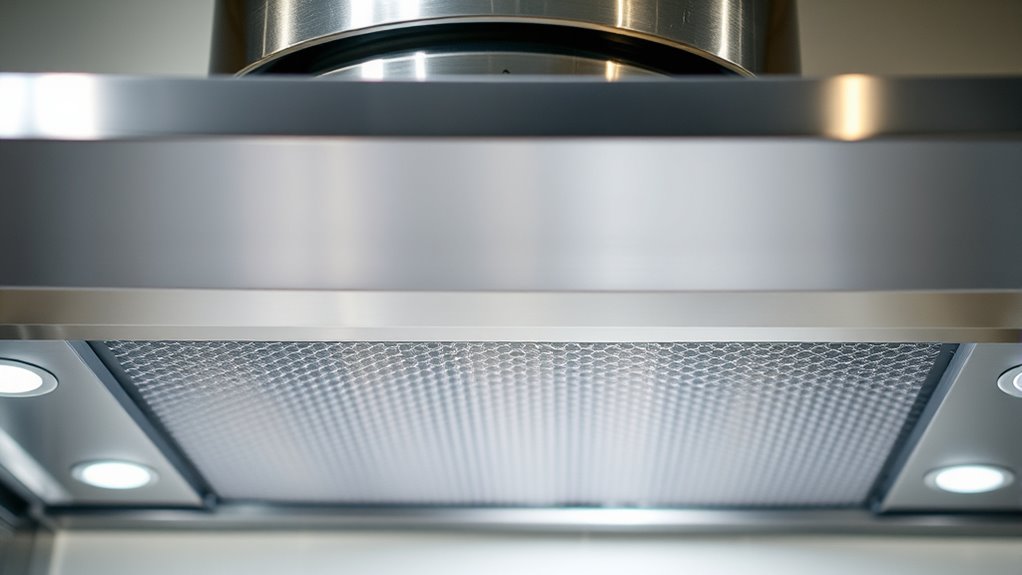

Regularly maintaining your vent hood is essential for keeping your indoor air quality high and your kitchen safe. When you clean filters and check ducts, you prevent grease buildup, which can reduce airflow and trap harmful fumes. A well-maintained vent system also prevents smoke, odors, and airborne contaminants from lingering, promoting a healthier environment. If you want to learn how timely upkeep can protect your home and improve airflow, continue exploring this important topic.
Key Takeaways
- Regular vent hood maintenance removes grease and debris, ensuring efficient removal of fumes and cooking odors.
- Well-maintained filters and ducts prevent airborne contaminants from settling, improving indoor air quality.
- Proper ventilation system operation reduces smoke, steam, and airborne particles that degrade air cleanliness.
- Routine inspections and cleaning prevent buildup that can hinder airflow and cause health hazards.
- Consistent maintenance extends equipment lifespan and supports a healthier, safer kitchen environment.
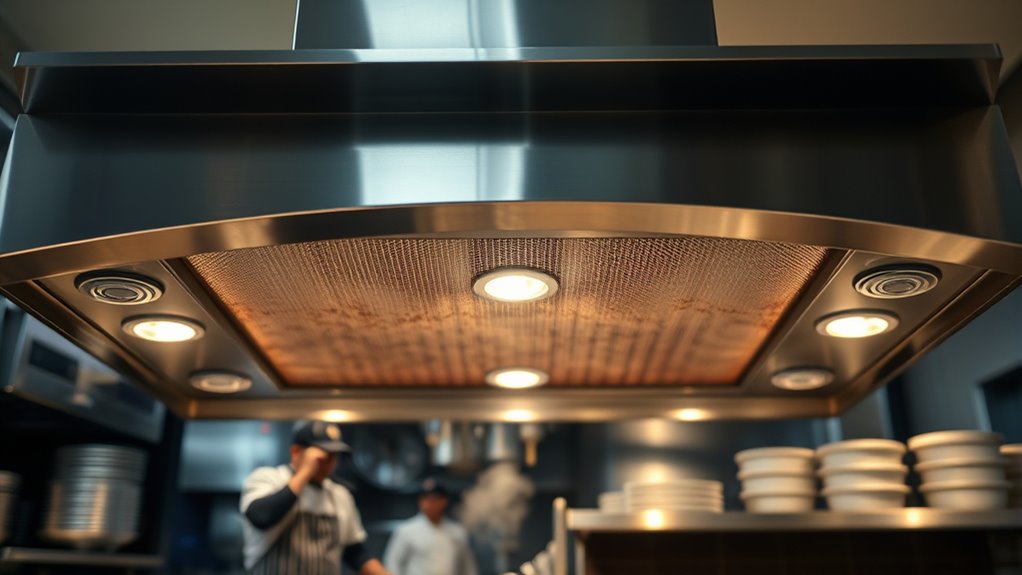
A well-maintained vent hood is vital for guaranteeing good indoor air quality and a safe cooking environment. When you prioritize regular maintenance, you actively support kitchen hygiene and keep airborne contaminants under control. A clean vent hood effectively removes fumes and cooking odors, preventing them from settling into your kitchen surfaces or circulating throughout your home. If you neglect this key appliance, grease and grime can accumulate, reducing its efficiency and compromising air quality. Over time, clogged filters and dirty ducts hinder fumes removal, allowing smoke, steam, and airborne grease particles to linger, which can lead to poor indoor air quality and health issues.
Keeping your vent hood in top shape requires consistent attention. You should regularly inspect and clean the filters, as they play an essential role in trapping grease and other particles. When filters become saturated with grease, their ability to remove fumes diminishes, making your kitchen less hygienic and increasing the risk of fire hazards. Many filters are dishwasher-safe, so you can remove and clean them frequently to maintain peak performance. In addition, the vent ductwork should be checked periodically for obstructions or build-up. Any debris or grease within the ducts can impede airflow, decreasing fumes removal efficiency and allowing stale air to circulate. Regular maintenance also helps extend the lifespan of your equipment, saving you money in the long run.
Proper vent hood maintenance isn’t just about cleaning; it’s also about understanding the importance of ventilation. Ensuring your exhaust fan is functioning correctly and operating at the right capacity helps to extract fumes effectively. A powerful, well-maintained fan pulls cooking emissions out of your kitchen swiftly, preventing smoke and odors from spreading and settling on walls, countertops, or furniture. This not only preserves kitchen hygiene but also enhances overall air quality, making your space healthier and more comfortable during meal preparations. Additionally, understanding the ventilation system can help you optimize airflow and maintain a cleaner cooking environment.
Frequently Asked Questions
How Often Should Vent Hoods Be Professionally Inspected?
You should schedule a professional inspection of your vent hood at least once every year to guarantee its peak performance and safety. Regular inspections help extend the vent hood lifespan by catching issues early. If you notice unusual noises, odors, or decreased airflow, consider more frequent check-ups. Following a consistent professional inspection schedule keeps your vent hood functioning properly, protects your air quality, and prevents costly repairs down the line.
What Are the Signs of a Malfunctioning Vent Hood?
Imagine smoke lingering, odors stubborn, or grease buildup on surfaces—that’s how a malfunctioning vent hood shows signs. You might notice decreased airflow, strange noises, or persistent smells despite use. These issues cut into your vent hood’s lifespan and can disrupt your kitchen design. Regular inspection and maintenance help you catch these signs early, ensuring your vent hood functions efficiently and keeps air quality high.
Can DIY Cleaning Damage the Vent Hood?
DIY cleaning can sometimes cause vent hood damage if you’re not careful. Using harsh chemicals or abrasive tools might harm the filters or motor components. If you neglect proper techniques or don’t follow manufacturer instructions, you risk misaligning parts or damaging the fan. To avoid DIY cleaning damage, use gentle cleaners, soft brushes, and stick to recommended procedures. When in doubt, consulting a professional guarantees your vent hood stays in good condition.
How Do Vent Hoods Impact Indoor Air Quality Long-Term?
Vent hoods directly impact your indoor air quality over time by removing smoke, grease, and airborne contaminants. When they function properly, they diminish health impacts like respiratory issues and allergies. Neglecting maintenance can lead to poor air circulation, buildup of harmful particles, and mold growth, all of which compromise your health. Regular cleaning and inspection ensure your vent hood continues to protect your indoor environment and promote healthier living conditions.
Are There Specific Filters Recommended for Better Air Purification?
If you want better air purification, choosing the right filters is vital. You should look for high-efficiency particulate air (HEPA) filters, which trap tiny particles, or activated carbon filters that absorb odors and gases. These filters considerably improve your indoor air quality. Don’t settle for the standard—invest in advanced filter selection to guarantee your vent hood effectively reduces pollutants and keeps your air clean and healthy.
Conclusion
Regularly maintaining your vent hood is essential for keeping your home’s air clean and safe. Did you know that a dirty vent hood can reduce air quality by up to 50%, leading to health issues and unpleasant odors? By scheduling routine cleanings and inspections, you guarantee peak performance and healthier indoor air. Don’t overlook this simple step—your lungs will thank you, and your home will feel fresher every day. Stay proactive and breathe easier!