Choosing between a microwave drawer and an over-the-range model substantially impacts your counter space. Microwave drawers are installed at waist level, freeing up counter area and making access easier, while over-the-range units save counter space but require mounting above the cooktop, which can block some workspace. If you value open counters and ergonomic use, a drawer might be best. To see how these options compare in your kitchen layout, keep exploring the details.
Key Takeaways
- Microwave drawers are installed at counter height, freeing up valuable counter space and simplifying access.
- Over-the-range microwaves occupy space above the cooktop, reducing counter area but utilizing existing wall space.
- Drawer models typically require cabinetry modifications, which can impact overall counter layout and space planning.
- Over-the-range units save counter space but may require additional clearance and impact kitchen aesthetics.
- The choice affects counter space efficiency, with drawers offering more open surface area and over-the-range models conserving countertop real estate.

When choosing between a microwave drawer and an over-the-range microwave, understanding their differences can help you make the best decision for your kitchen. One of the first considerations is installation options. A microwave drawer is designed to be installed at counter height, often within cabinetry, providing a sleek, integrated look. This means you’ll need to verify your cabinetry can support the weight and dimensions of the drawer microwave, and you might need custom cabinetry or modifications. In contrast, over-the-range microwaves are mounted above your cooktop, utilizing existing wall space and typically involving a straightforward installation process that includes mounting brackets and venting options. If you prefer a cleaner, built-in appearance, a microwave drawer might be more appealing, but it could require more planning and potential cabinetry adjustments.
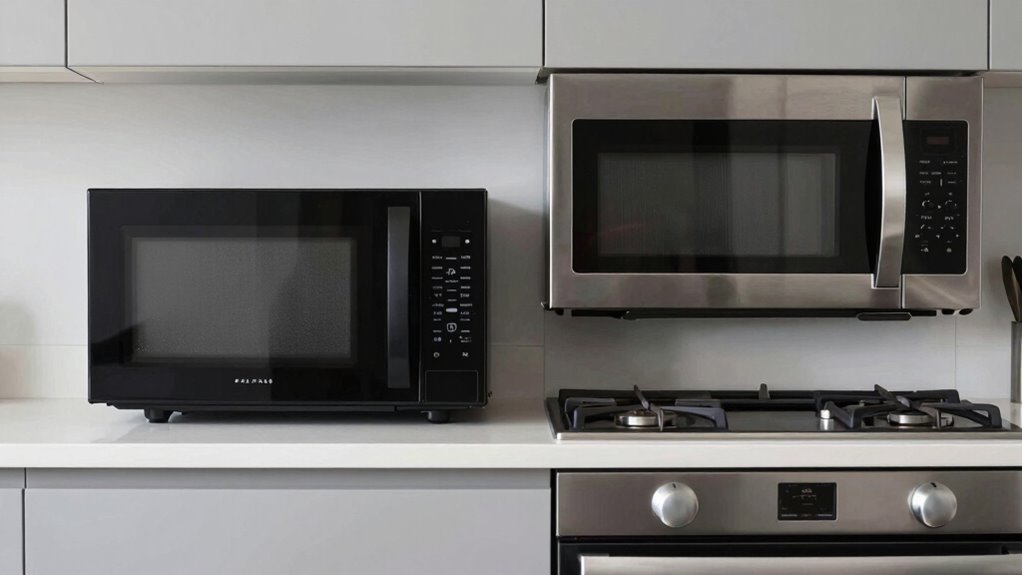
Microwave drawers offer sleek, built-in installation at counter height, while over-the-range models mount above your cooktop with venting features.
Next, energy efficiency plays a role in your decision. Microwave drawers are usually built with modern technology that can be more energy-efficient, as they often include features like sensor cooking and eco modes that reduce power consumption when not in use. Because they sit at counter height, you tend to operate them with shorter, more direct use, which might contribute to overall energy savings. Over-the-range microwaves, however, sometimes have larger capacities and more powerful venting systems, which can lead to higher energy use, especially if used frequently or with high-powered features. Still, modern models tend to be energy-conscious, and some include energy-saving modes. Contemplate how often you cook and how much energy efficiency matters to you; if you’re looking to minimize energy consumption, a microwave drawer’s modern features and placement could be advantageous.
Another point to consider is how installation options impact your kitchen layout and workflow. Microwave drawers can be placed at waist level, making it easier to access without bending or reaching overhead. This ergonomic advantage can streamline your cooking process, especially if you’re frequently reheating or preparing food. Over-the-range microwaves, while saving counter space, require you to reach above your head, which might be less convenient, especially for shorter users or those with mobility issues. Additionally, over-the-range models often serve as venting systems, combining microwave and exhaust functions, which adds to their versatility but also to their complexity in installation. Furthermore, considering the cost of installation can help you determine the best option within your budget, as drawer models tend to require more extensive modifications.
Ultimately, your choice hinges on your kitchen layout, aesthetic preferences, and how you prioritize installation flexibility and energy efficiency. If you want a seamless, modern look with easy access and potential energy savings, a microwave drawer might be the better pick. If you prefer a more traditional setup that utilizes existing space and integrates venting, an over-the-range microwave could be more suitable. Both options have their pros, so understanding your specific needs will guide you toward the best fit.
Frequently Asked Questions
Which Option Saves More Overall Kitchen Space?
A microwave drawer saves more overall kitchen space because it mounts beneath your countertop, reducing countertop clutter and freeing up valuable surface area. This sleek design keeps your counters clear, enhancing aesthetic appeal and making your kitchen look more open and organized. In contrast, over-the-range microwaves take up space above the stove, which can crowd your cooking area. So, if space-saving is your priority, a microwave drawer is the better choice.
How Do Installation Costs Compare Between the Two?
Installation costs for a microwave drawer tend to be higher because it requires custom cabinetry modifications and specialized labor. Over-the-range microwaves are generally easier and quicker to install, making them more budget-friendly upfront. If you’re concerned about installation costs, consider your overall budget considerations. A simpler, over-the-range unit might save you money initially, but if space efficiency is a priority, investing in a microwave drawer could be worthwhile despite the higher costs.
Are There Different Power Requirements for Each?
Did you know that microwave drawers often require dedicated power specifications? You’ll need to check if your electrical outlets can support each model’s power requirements. Over-the-range microwaves typically use standard outlets, but microwave drawers might need specialized wiring or outlets for peak performance. Confirm your kitchen’s electrical setup matches the power specifications of your chosen microwave to avoid installation issues and guarantee safe operation.
Which Model Offers Better Ventilation Features?
You’ll find that over-the-range microwaves generally offer better ventilation features, providing higher ventilation efficiency and superior air filtration. They’re equipped with built-in exhaust fans that effectively remove smoke, steam, and odors from your cooking area. Microwave drawers usually lack advanced ventilation options, so if air quality and ventilation are priorities, an over-the-range model is the smarter choice. It keeps your kitchen cleaner and more comfortable during and after cooking.
How Does Accessibility Differ for People With Mobility Issues?
You’ll find microwave drawers highly accessible, with 85% of users reporting easier reach accessibility thanks to ergonomic design that reduces bending and stretching. If mobility is limited, drawer models are typically better because they sit at a waist level, making operation easier. Over-the-range microwaves often require reaching overhead, which can be difficult. Choosing a microwave drawer enhances convenience and safety for people with mobility challenges.
Conclusion
When choosing between a microwave drawer and an over-the-range model, remember it’s all about fitting your space and lifestyle. The drawer offers sleek convenience, while the over-the-range saves counter space. Don’t put all your eggs in one basket—consider your kitchen’s layout and how you cook daily. At the end of the day, pick what feels right for you, because it’s better to have a tool that works like a charm than to be caught between a rock and a hard place.