TL;DR

Get home appliances delivered free with Prime
- Fast, free delivery on millions of items
- Prime Video, Amazon Music and more included
- Member-only deals all year
After selling the large farmhouse where her family had lived for a decade, Livingetc contributor Lisa Dawson moved to a smaller home in York and left behind a kitchen she had reshaped over the years. A year later, she returned for dinner and found the room being used and personalized by its new owners; she later designed a different kitchen for her new home, drawing on lessons from the old one.
Livingetc contributor Lisa Dawson has described leaving behind the family kitchen she had adapted over a decade when she sold her large farmhouse in 2024 and moved to a smaller home in York. Returning about a year later for dinner with the new owners helped her see the room not only as a record of her family’s life, but as a kitchen now serving another household.
Dawson said the farmhouse had become larger than her family needed: two of her three children were at university, and the household had reduced from five people to three. The detached Georgian farmhouse had four lawns and a converted barn apartment, and she wrote that maintaining the property was costly when much of it was going unused. The buyers, a couple with six children, could make use of the space. Dawson and her family downsized to a Victorian terraced house in central York with a courtyard garden.
She had not installed the farmhouse kitchen, which was already new when the family moved in, but altered its appearance over time, drawing on ideas for organizing kitchen storage. Her changes included replacing the work surface and cupboard doors, adding shelves, tiling the chimney breast and changing the floor. She painted the doors several times, in colors ranging from lilac to pale green, navy and sandy yellow. A refurbished French shop counter, more than two metres long, had been turned into a central workbench for food preparation and eating. Its size made it impractical to take to the new house.
In the smaller home, Dawson had to pare back a collection of vintage cookware, glassware and serving pieces. She kept items for their memories or because she particularly valued them. The new house’s kitchen had three ovens and extensive storage, remnants of its previous owner, a chef who had run supper clubs. Dawson later renovated the room, removed walls and redesigned it for herself and her son. She said the experience of planning that kitchen was shaped by what she had learned in the farmhouse.
How a Kitchen Holds Family History
Dawson’s account shows why moving can involve more than deciding which furniture fits a smaller floor plan. The old kitchen had been a gathering place for her family and the setting for social events, family meals and time together during lockdown. Personal changes—from lighting and art to the distinctive central counter—made a kitchen that she had not built feel closely tied to her own household.
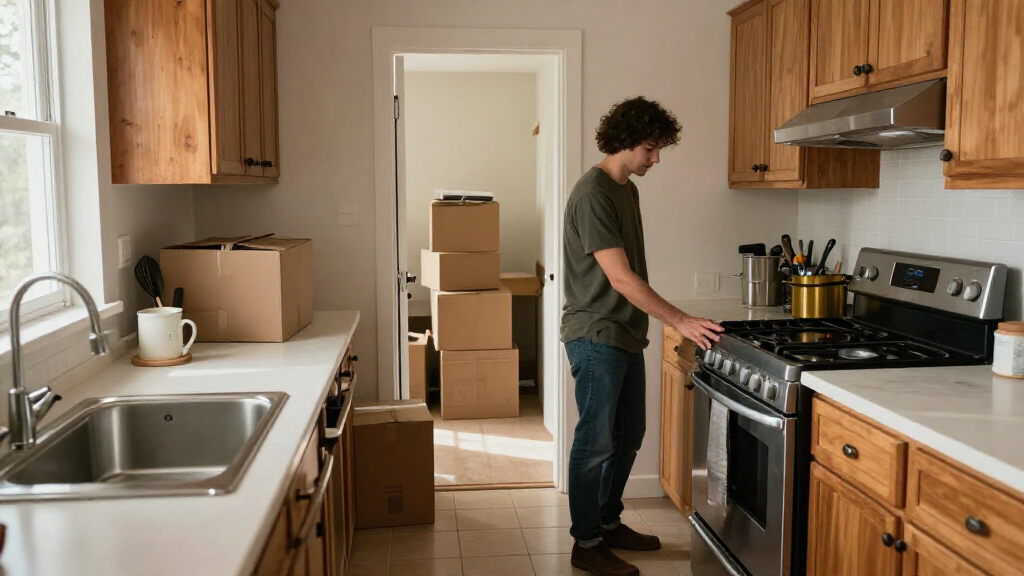
Her return also offers a practical perspective on leaving a home behind: the room did not have to remain frozen as a reminder of its former occupants. Dawson wrote that the new owners had added their own art and accessories, and that she was glad to see them using the kitchen for gatherings. That response is her personal reflection, not evidence that every move or home sale feels the same. Still, it illustrates how a familiar room can retain its purpose while its meaning changes for the people who live there.
Products Worth Considering

LEVOIT Vital 200S-P Smart Air Purifier for Large Rooms

Shark Rotator Lift-Away Upright Vacuum, White/Red (NV501)

Shark PowerDetect Corded Stick Vacuum with HEPA Filtration, Purple (HZ4001AMZ)
As an affiliate, we earn on qualifying purchases.
From Farmhouse to York Terrace
The move followed a change in the family’s circumstances. Dawson said the farmhouse had suited a busy family of five, but became less practical as two children left for university and the household grew quieter. Selling to a larger family allowed the buyers to use a property whose grounds and rooms had become more than Dawson’s household needed.
Downsizing meant making choices about both space and attachment. Dawson’s collection had grown through charity-shop and car-boot-sale finds, and the farmhouse had room for pieces that would not fit comfortably in the York house. The kitchen itself could not move with her, including its large workbench. About a year after the sale, the new owners invited her back to dinner. She described sitting on the counter’s bar-stool side while the new owner, a chef, cooked—an experience that gave her a different view of a room she had once used from the working side.
“I knew that I’d miss it.”
— Lisa Dawson, writing for Livingetc
What the Account Does Not Establish
The source is a first-person account, not a reported study of moving or home design. It does not give the sale price, renovation costs, or precise dates for the later kitchen renovation and dinner visit. Dawson also does not describe the full design or final layout of the York kitchen in the supplied material, so details beyond the changes she names cannot be confirmed here.
Her reaction to returning to the farmhouse was personal: she said the visit did not feel particularly odd and that she was pleased to see the kitchen in use. The account does not establish how other former owners might feel when revisiting a home, or whether the new owners plan to alter the kitchen further.
A New Kitchen Takes Shape
Dawson’s next step, as described in the Livingetc report, was to make the smaller home’s kitchen work better for her and her son. During the renovation, she removed the existing arrangement and knocked down walls. She also replaced the spotlights, which she said she had rarely used in the old kitchen, with ceramic wall lights and counter lamps intended to create a more ambient feel.
The source material does not provide a completion date or further updates on the York renovation. The account ends with the design lessons she carried into the new space: a kitchen’s character need not depend on its size, and lighting and personal details can shape how it feels to live in.
Key Questions
Why did Lisa Dawson leave the farmhouse?
Dawson said the household had become smaller as two of her three children went to university. The large property and grounds were costly to maintain when her family was using only part of the space.
What did she leave behind in the kitchen?
She could not take the more-than-two-metre French shop counter that had been adapted as a workbench. The kitchen itself also stayed with the house, although Dawson had changed its surfaces, flooring, shelves, tiles and cupboard doors over the years.
How did she feel when she returned?
Dawson wrote that the visit did not feel especially odd. She enjoyed being cooked for and said she was glad to see the new owners using the kitchen for meals and gatherings.
What did she change in her new kitchen?
She renovated the York home’s kitchen, removed walls and replaced spotlights with ceramic wall lights and counter lamps. She said she wanted the lighting to feel more ambient and cozy.
Source: livingetc.com