
Regular descaling is vital to prevent mineral buildup that can clog water pathways, reduce heating efficiency, and ruin espresso flavor. If you wait too long, deposits can cause costly repairs or machine failure. How often you clean depends on how hard your water is, but generally, every few weeks to months is best. Keeping up with descaling now helps your machine perform at its best and lasts longer—keep going to discover the full timeline.
Key Takeaways
- Regular descaling prevents mineral buildup that can clog water pathways and impair machine performance.
- Ignoring descaling accelerates damage, leading to costly repairs or early machine replacement.
- The frequency of descaling depends on water hardness; harder water requires more frequent maintenance.
- Following manufacturer guidelines ensures effective descaling and maintains optimal espresso quality.
- Monitoring indicators and maintaining a schedule helps extend your espresso machine’s lifespan.
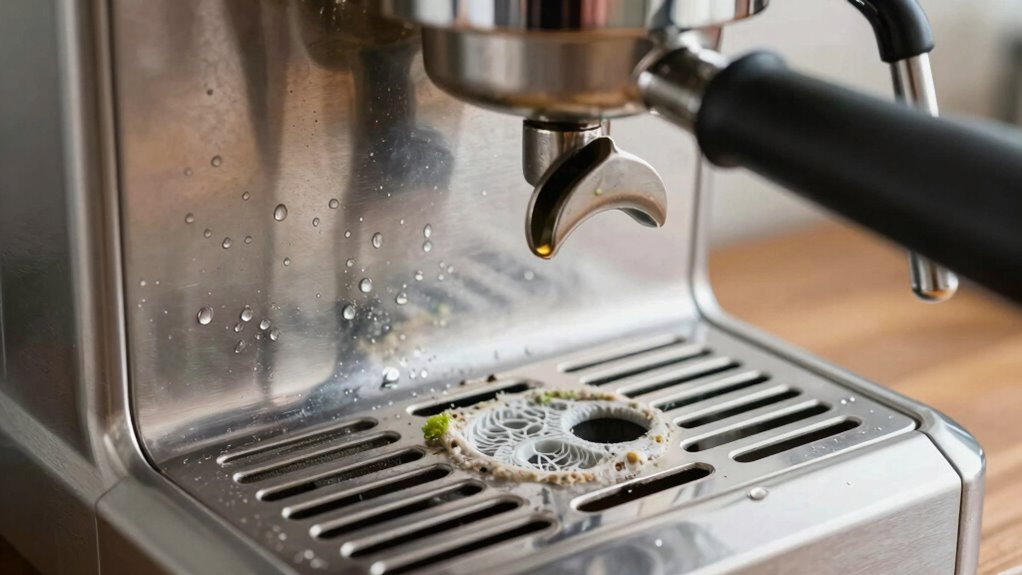
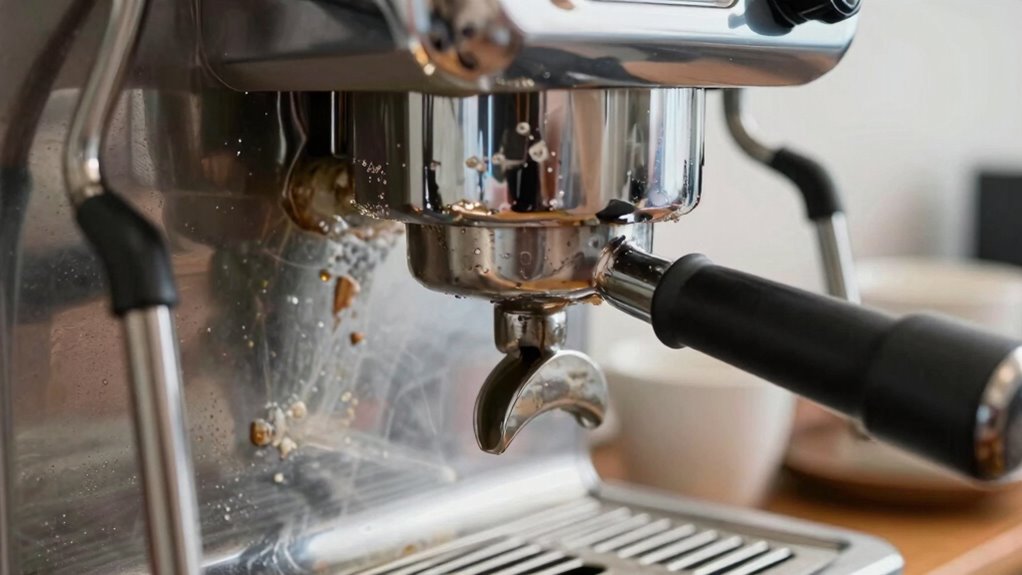
If you want your espresso machine to brew consistently great-tasting coffee, regular descaling is essential. Over time, minerals from your water supply can cause mineral buildup inside the machine, which directly affects the quality of your espresso. The level of water hardness you have in your area plays a significant role in how quickly this buildup occurs. Hard water contains higher concentrations of calcium and magnesium, which tend to accumulate as deposits in the machine’s internal components. These deposits can clog the water pathways, reduce heating efficiency, and impair the overall performance of your espresso maker.
Regular descaling prevents mineral buildup that hampers espresso quality and machine performance.
When mineral buildup accumulates, it doesn’t just diminish the quality of your coffee; it also puts unnecessary strain on the machine’s mechanical parts. You might notice your espresso takes longer to brew or that the water doesn’t flow as smoothly. Over time, this can lead to costly repairs or even the need for a replacement if the buildup becomes severe. Regular descaling acts as a preventive measure, removing these mineral deposits before they cause real damage. It’s a simple process that can save you money and extend the lifespan of your investment.
Understanding your water hardness level can help you determine how often you should descale. If you live in an area with very hard water, you might need to descale every few weeks. Softer water requires less frequent descaling, but it’s still important to stay vigilant. Many espresso machines have indicators or warning lights that signal when descaling is necessary, but don’t rely solely on those. It’s good practice to set a regular schedule based on your water conditions—perhaps every month or two—to keep mineral buildup at bay. Additionally, water quality is a key factor influencing how quickly mineral deposits form, so testing your water can help you plan your maintenance routine more effectively.
Using the right descaling solution is crucial. Commercial descaling products are designed to dissolve mineral deposits effectively and safely. You should follow the manufacturer’s instructions carefully, ensuring you rinse the machine thoroughly afterward to prevent any residual taste or chemical residue from affecting your coffee. Regular descaling isn’t just about maintaining performance; it’s about ensuring every shot of espresso you brew is as flavorful and consistent as it can be. Neglecting this vital maintenance step invites mineral buildup, which can silently erode your machine’s efficiency and your enjoyment. By staying proactive and descaling regularly, you’re making sure your espresso machine continues to deliver high-quality coffee for years to come.
Frequently Asked Questions
How Often Should I Descale My Espresso Machine?
You should descale your espresso machine every 1 to 3 months, depending on your water hardness and usage. If your water is hard, you’ll need to descale more often. Keep an eye on your machine’s performance—any decrease in coffee quality or longer brewing times indicates it’s time to descale. Regular descaling based on your water hardness and usage guarantees your machine stays in top shape and brews great coffee.
What Are the Signs My Machine Needs Descaling?
Your espresso machine is begging for help when you notice slow water flow, strange noises, or bitter-tasting coffee. These are clear signs of scale buildup, which threatens your machine’s longevity. Ignoring these symptoms turns your beloved espresso maker into a paperweight. Descaling at the right time keeps your machine running smoothly, preserves flavor, and saves you from costly repairs. Pay attention, or risk turning your espresso dreams into a desolate, scale-covered nightmare.
Can I Use Vinegar for Descaling?
You can use vinegar for descaling, but it’s not always the safest choice. Vinegar safety varies depending on your machine, and some manufacturers advise against it because it can damage seals or internal parts. As a natural alternative, diluted vinegar works but always check your machine’s manual first. For better safety and effectiveness, consider commercial descaling solutions designed specifically for espresso machines, ensuring you protect your investment.
Does Descaling Affect Coffee Flavor?
Descaling can considerably affect your coffee flavor by removing calcium buildup caused by water hardness. If you skip descaling, mineral deposits can alter water flow and heat, leading to dull or off-tasting coffee. Regular descaling ensures your machine functions at its best, preventing flavor issues. So, yes, descaling helps maintain the true taste of your coffee by keeping mineral buildup at bay and ensuring consistent brewing quality.
Is Descaling Necessary for All Types of Espresso Machines?
Just like a trusted car needs regular oil changes, your espresso machine benefits from consistent descaling. It’s essential for all types, whether manual or automatic, to prevent lime build-up that hampers performance. Proper machine maintenance, including descaling, extends your machine’s lifespan and guarantees better coffee flavor. The descaling benefits include smoother operation and consistent extraction, making every cup taste as good as the first. Don’t skip this crucial step for your machine’s health.
Conclusion
Remember, descaling isn’t optional if you want your espresso machine to perform at its best. Skipping this step can cut your machine’s lifespan in half, costing you more in repairs and replacements. Did you know that mineral buildup can cause up to 80% of espresso machine failures? So, stay ahead of the game by descaling regularly—your taste buds and wallet will thank you for it. Keep your machine running smoothly and enjoy perfect espresso every time!