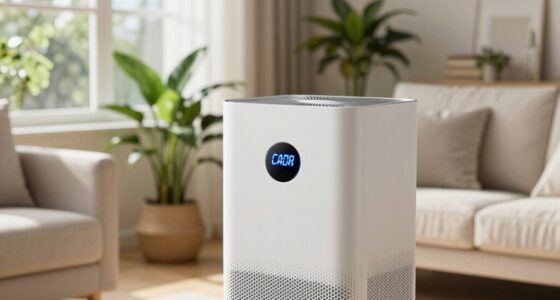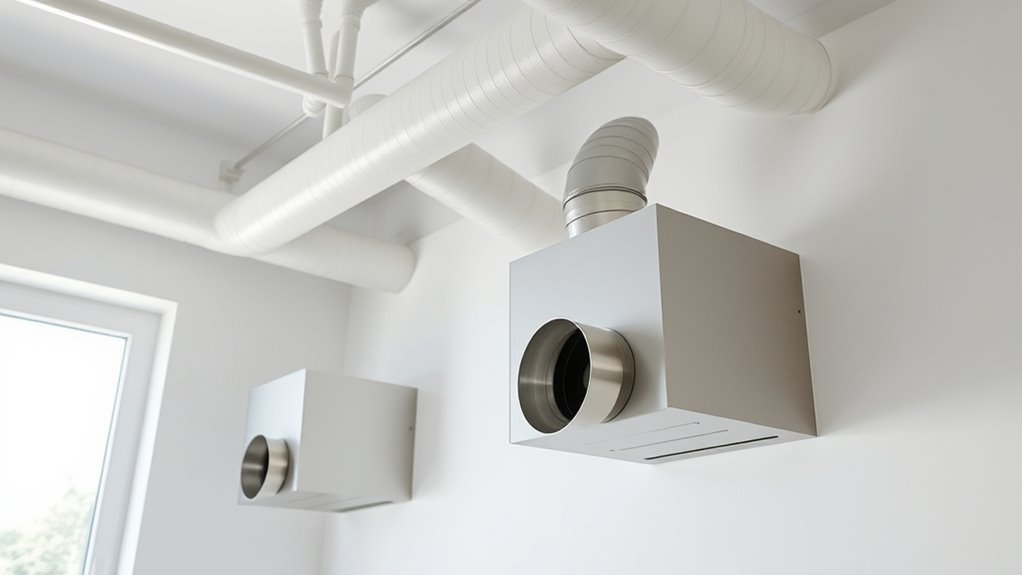
Air exchangers and ERVs in your home continuously bring in fresh outdoor air while removing stale indoor air, helping to improve indoor air quality and reduce pollutants. They operate quietly and automatically, maintaining a healthy environment while balancing temperature and humidity. ERVs, in particular, recover heat and moisture to minimize energy loss, saving you money on heating and cooling. To learn more about how these systems can benefit your home, keep exploring the details below.
Key Takeaways
- They improve indoor air quality by continuously bringing in fresh outdoor air and exhausting stale air.
- ERVs recover heat and moisture, reducing energy loss and maintaining comfortable indoor humidity levels.
- They help lower energy costs by minimizing heat transfer during ventilation.
- Air exchangers and ERVs support moisture control, preventing mold growth and humidity issues.
- They operate quietly and require minimal maintenance, ensuring a healthier, more comfortable home environment.
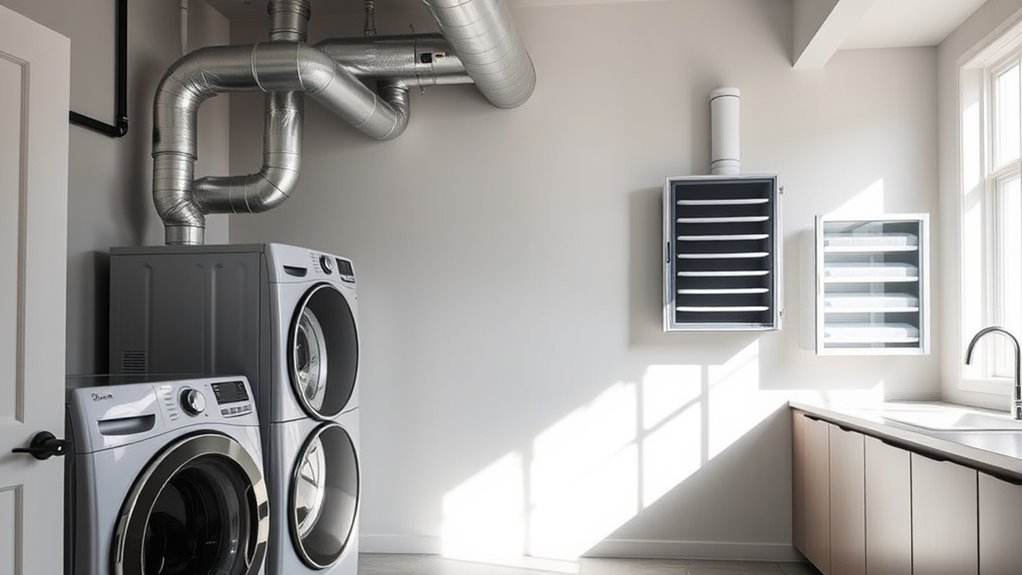
Have you ever wondered how to keep your home’s air fresh and energy-efficient? It’s a common concern, especially as indoor air quality becomes more important for health and comfort. Air exchangers and energy recovery ventilators (ERVs) are designed to address this by improving ventilation efficiency. These systems work continuously, bringing fresh outdoor air into your home while exhausting stale indoor air. This process helps maintain a healthy indoor environment without letting energy escape, which is essential for reducing heating and cooling costs.
Ensure fresh, healthy indoor air while saving energy with continuous ventilation systems like air exchangers and ERVs.
When you install an air exchanger or an ERV, you’re actively enhancing your home’s ventilation efficiency. Unlike traditional exhaust fans or opening windows, these systems are engineered to operate automatically and consistently. They intelligently manage airflow, optimizing how much fresh air enters and how much polluted air leaves. This means your home gets a steady supply of filtered, fresh air, which directly impacts indoor air quality. Better indoor air quality isn’t just about comfort; it’s about reducing allergens, pollutants, and humidity that can cause respiratory issues or mold growth.
An ERV takes it a step further by recovering heat and, in some cases, moisture from the outgoing air. This process makes your ventilation system more energy-efficient because it transfers thermal energy between incoming and outgoing air streams. As a result, you don’t lose as much heat during winter or coolness during summer, helping to maintain a consistent indoor temperature while using less energy. This not only lowers your utility bills but also supports environmental sustainability.
You’ll appreciate how these systems operate quietly and require minimal maintenance once installed. Many models include filters that trap dust, pollen, and other airborne particles, further improving indoor air quality. Regular filter changes and system checks keep everything running smoothly, ensuring that fresh air keeps flowing without hassle. Additionally, integrating ventilation systems with your home’s HVAC can further optimize overall air quality and energy savings.
Frequently Asked Questions
How Do Air Exchangers Differ From Standard HVAC Systems?
Air exchangers differ from standard HVAC systems by focusing on controlled ventilation, improving energy transfer and maintaining consistent ventilation rates. Unlike traditional HVACs that heat or cool air, air exchangers continuously bring in fresh air while exhausting stale air, reducing energy loss. This process enhances indoor air quality without markedly impacting your energy bills, making them a smart choice for better ventilation and energy efficiency in your home.
What Maintenance Is Required for ERVS?
You should regularly replace the filters on your ERV to guarantee ideal air quality and system efficiency. Additionally, schedule routine system inspections to check for dust buildup, duct issues, or mechanical problems. By staying proactive with filter replacement and system inspections, you help your ERV operate smoothly, improve indoor air comfort, and extend its lifespan. Aim for these maintenance tasks every 6 to 12 months, or as recommended by the manufacturer.
Can ERVS Improve Indoor Air Quality?
Yes, ERVs can improve your indoor air quality by reducing indoor pollutants and meeting ventilation standards. They bring in fresh air while exhausting stale indoor air, effectively filtering out dust, allergens, and odors. This continuous ventilation helps maintain healthier indoor environments, especially in tightly sealed homes. By installing an ERV, you actively enhance air circulation and guarantee your indoor space stays fresh, clean, and compliant with ventilation standards.
Are Air Exchangers Suitable for All Climate Zones?
Air exchangers are suitable for most climate zones, but you should consider their adaptation to humid or cold climates. In humid areas, look for models with humidity control features to prevent excess moisture. For cold climates, choose units with cold climate adaptation that pre-condition incoming air, preventing heat loss and ensuring comfort. Properly selected air exchangers enhance indoor air quality while matching your home’s specific climate needs.
What Are the Energy Efficiency Benefits of ERVS?
Ever wondered how to cut energy costs while ensuring fresh air? ERVs boost your home’s ventilation efficiency by reclaiming heat from outgoing air, leading to significant energy savings. They reduce the need for heating or cooling, making your system more efficient overall. This not only lowers your utility bills but also maintains a comfortable indoor environment. Are you making the most of your home’s energy potential with an ERV?
Conclusion
In choosing between air exchangers and ERVs, you balance fresh air with energy efficiency. While exchangers instantly boost ventilation, ERVs preserve humidity, creating comfort in every season. Both systems fight indoor pollutants, yet their differences highlight your home’s unique needs. Ultimately, the right choice isn’t just about technology; it’s about fostering a healthier, more comfortable environment. In this dance of air, understanding each role helps you craft a space that breathes with life and purpose.