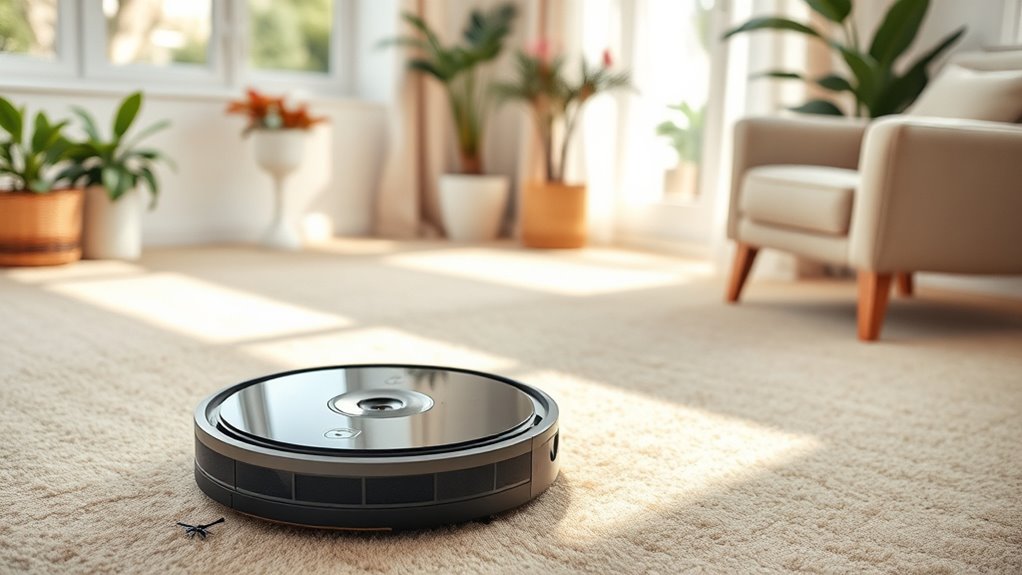
Using robot vacuums with allergen filtration helps you keep indoor air cleaner by capturing tiny particles like dust, pollen, and pet dander. These vacuums often feature HEPA filters that trap at least 99.97% of particles as small as 0.3 microns, preventing allergens from recirculating. Regular use and proper maintenance of filters boost their effectiveness and create a healthier environment. To discover how to maximize these benefits, keep exploring the details below.
Key Takeaways
- Choose robot vacuums equipped with sealed HEPA filtration to effectively trap 99.97% of airborne allergens.
- Regularly replace HEPA filters every few months to maintain optimal allergen removal performance.
- Use the vacuum consistently, ideally daily, to reduce dust, pollen, pet dander, and other irritants.
- Enable smart navigation to target high-traffic and hard-to-reach areas for thorough cleaning.
- Proper maintenance and timely filter changes ensure continuous allergen control and healthier indoor air.

If you’re concerned about allergies, choosing a robot vacuum with allergen filtration can make a noticeable difference. These devices are designed to improve indoor air quality by capturing tiny particles that often trigger allergy symptoms. Central to this capability are HEPA filters, which are proven to trap at least 99.97% of particles as small as 0.3 microns. When integrated into a robot vacuum, HEPA filters substantially enhance allergen control, reducing dust, pollen, pet dander, and other common airborne irritants. This means that every time your robot cleans, it actively works to remove allergens from your home environment, helping you breathe easier and reducing allergy flare-ups.
The effectiveness of a robot vacuum with allergen filtration hinges on its filtration system. HEPA filters are the gold standard because they prevent allergens from recirculating into the air after being picked up from your floors and surfaces. Unlike simple filters, HEPA filters are built to trap microscopic particles, making them ideal for allergy sufferers. When shopping for a robot vacuum, look for models explicitly claiming HEPA filtration or allergen control. These vacuums often feature sealed systems that prevent unfiltered air from escaping back into the room during operation, further improving their allergen-removing capabilities.
Using a robot vacuum with allergen filtration is straightforward, but consistent use is key. Set it to clean frequently—daily if possible—to keep allergen levels low. Since these vacuums are often equipped with smart navigation, they can target high-traffic areas and reach under furniture and into corners, places where allergens tend to accumulate. As they work, the HEPA filters trap particles, preventing them from being released back into the air. Over time, this continuous process can dramatically improve your indoor air quality, especially if you combine it with other allergen control measures like regular dusting and washing bedding.
It’s also important to think about maintenance. HEPA filters need regular replacement—usually every few months—to stay effective. Many models will alert you when it’s time to change the filter, making it easier to maintain ideal allergen control. Proper maintenance ensures your robot vacuum continues to perform at its best, keeping airborne irritants at bay. By choosing a model with a high-quality HEPA filtration system and maintaining it properly, you’re taking a significant step toward creating a healthier, more allergy-friendly home environment. Moreover, understanding the contrast ratio of your vacuum’s filtration system can help you gauge its ability to produce a clean, allergen-free environment.
Frequently Asked Questions
Can Robot Vacuums Replace Traditional Allergy Treatments?
Robot vacuums with allergen filtration can’t replace allergy medication or address environmental triggers. You still need allergy medication for symptom control and to reduce reactions. However, using a robot vacuum helps keep your home cleaner by removing dust, pet dander, and other triggers. This can lessen allergy symptoms over time, but it’s not a substitute for medical treatment or avoiding specific environmental triggers.
Are Robot Vacuums Safe for Pets With Allergies?
Yes, robot vacuums with allergen filtration are safe for pets with allergies. They effectively pick up pet hair, dust mites, and other allergens from carpets and floors, reducing your pet’s exposure. Make sure to choose a model with HEPA filters, which trap tiny particles. Regular vacuuming can help minimize allergy symptoms, but always monitor your pet for any reactions and consult your vet for personalized advice.
How Often Should I Replace the Allergen Filters?
You should replace the allergen filter every 3 to 6 months, depending on usage and the allergen filter lifespan. Regular filter replacement guarantees your robot vacuum maintains peak allergen filtration and cleaning performance. Check the manufacturer’s recommendations, as some filters may need more frequent changes if you have pets or high allergen levels. Staying on top of filter replacement keeps your home cleaner and healthier for your pets and family.
Do Robot Vacuums With Allergen Filtration Work on All Floor Types?
Robot vacuums with allergen filtration generally work well on most floor types, but check their floor compatibility first. They excel on hardwood, tile, and low-pile carpets, effectively trapping allergens. Keep in mind that filter lifespan varies; replace filters as recommended to maintain ideal performance. For thick carpets or uneven surfaces, make sure the robot’s suction power and brush design suit those floors for thorough cleaning.
Are There Any Maintenance Tips to Maximize Allergen Removal?
To maximize allergen removal, you should regularly check the filter maintenance and replace the allergen trap as needed. Clean the filter according to your robot vacuum’s instructions, ensuring it’s free of dust and debris. Replace the allergen trap when it becomes saturated or clogged. Doing these simple steps keeps the vacuum working efficiently, capturing more allergens and improving your indoor air quality.
Conclusion
So, you thought robot vacuums were just for convenience? Turns out, they might just be your secret weapon against allergens—if you pick the right one. Ironically, while they clean your floors effortlessly, you still need to stay vigilant about other sneaky allergens lurking around. But hey, at least now, you can trust that your robot is tackling dust and pollen while you sit back and relax—finally benefiting from technology’s true potential.